Building a steady stream of clients is essential for any business. Without a reliable flow of customers, growth stalls. This guide offers a complete system for attracting and retaining clients consistently.
We provide real-world strategies that have helped entrepreneurs scale their operations. You will learn actionable steps, not just theory. Our framework covers mindset, marketing, and implementation.
Success requires effort and time. But with the right approach, you can achieve sustainable expansion. This article shares proven methods from industry leaders.
Key Takeaways
- Strategic client acquisition drives long-term business growth.
- A comprehensive framework covers mindset, strategy, and scaling.
- Real success stories demonstrate the effectiveness of these methods.
- Actionable insights are prioritized over theoretical concepts.
- Significant time and effort are needed for meaningful results.
- Common scaling challenges are addressed with practical solutions.
- Proven methodologies and case studies establish credibility.
Understanding the Foundation of Unlimited Client Acquisition
Many entrepreneurs struggle with inconsistent revenue streams. They chase after quick fixes rather than building solid foundations. This approach leads to frustration and wasted resources.
Ben Settle observed this pattern across various industries. He noted that professionals often need immediate results. This urgency causes them to overlook sustainable methods.
The real secret lies in understanding fundamental principles. These principles create lasting success rather than temporary gains. Let’s explore why traditional methods fail and what truly works.
Why Traditional Approaches Often Fall Short
Conventional marketing tactics frequently disappoint business owners. Mass advertising spreads messages too thin. It fails to connect with specific audience needs.
Cold calling has become increasingly ineffective. People screen calls and ignore unsolicited approaches. Generic messages get lost in today’s crowded marketplace.
These methods focus on quantity over quality. They prioritize immediate transactions over long-term relationships. This short-term thinking limits growth potential.
Traditional sales techniques often create resistance. People feel pressured rather than understood. They sense the transaction rather than genuine care.
The table below shows why outdated methods struggle in modern business environments:
| Traditional Approach | Primary Limitation | Modern Alternative |
|---|---|---|
| Mass Marketing | Lacks personal connection | Targeted messaging |
| Cold Calling | Low conversion rates | Warm introductions |
| Generic Advertising | Poor audience targeting | Niche-specific content |
| Transaction Focus | Short-term relationships | Value building |
| Price Competition | Race to the bottom | Value differentiation |
These limitations highlight the need for better strategies. Business growth requires more sophisticated approaches. The old ways simply don’t deliver consistent results.
The Mindset Shift Required for Sustainable Growth
Psychological barriers often block success more than external factors. Many business owners operate from scarcity mentality. They fear there aren’t enough clients to go around.
This fear leads to desperate behavior. It causes people to accept poor-fit clients. It also creates pressure during sales conversations.
Abundance thinking transforms this dynamic. It recognizes that valuable opportunities exist everywhere. This perspective changes how you approach your work.
Relationship building replaces transactional thinking. It focuses on understanding client needs deeply. This creates mutual value rather than one-time sales.
Diagnostic selling represents this shift perfectly. Instead of pitching services, you explore client challenges. You ask thoughtful questions that reveal real pain points.
This approach builds trust naturally. People feel heard rather than sold to. They become partners in finding solutions.
Systematic processes overcome sporadic efforts. Consistency in outreach and delivery builds momentum. Persistent action creates compounding results over time.
Many businesses have transformed through these mindset changes. They moved from struggling to thriving operations. Their client acquisition became natural and sustainable.
The foundation for unlimited growth begins internally. It requires examining beliefs about business and value. Then it manifests through improved external strategies.
Identifying Your Profitable Niche and Specialization
Finding your specific market position transforms business growth. Specialization creates clear pathways to premium clients and sustainable revenue. This approach separates successful ventures from struggling generalists.
Large agencies offer broad services with massive resources. Their generalist approach lacks deep specialty focus. You cannot compete on their terms but can win through concentrated expertise.
Moving Beyond Generalist Services to Expert Focus
Niche specialization delivers significant financial advantages. Focused services command higher prices and attract better clients. Specialists often outperform generalists in profitability and client satisfaction.
Follow this methodology to identify your profitable niche:
- Analyze your past successful projects and client results
- Identify patterns in your most enjoyable work
- Research market demand for specific specialized services
- Evaluate competition levels in potential niche areas
- Test your specialized offers with current clients
Transitioning from generalist to specialist requires strategic positioning. Start by gradually focusing your marketing messaging. Develop case studies that demonstrate your niche expertise.
Many businesses transformed through niche focus. A marketing agency shifted from general services to e-commerce SEO. They tripled their rates while reducing client acquisition efforts.
Deep expertise creates natural competitive advantages. Specialists develop referral networks that generalists cannot match. Your specialized knowledge becomes your strongest business asset.
| Generalist Approach | Specialist Advantage | Result Impact |
|---|---|---|
| Broad service offerings | Focused expertise | Higher perceived value |
| Price-based competition | Value-based pricing | Increased profit margins |
| Random client acquisition | Targeted ideal clients | Better client relationships |
| General marketing | Specific messaging | Improved conversion rates |
| Industry average results | Exceptional outcomes | Stronger reputation |
How Deep Expertise Attracts Premium Clients
Specialization naturally commands premium pricing. Clients pay more for specific expertise than general services. Your focused knowledge demonstrates greater value and better results.
Testing niche viability prevents wasted effort. Create minimum viable offers to gauge market response. Use client feedback to refine your specialized positioning.
Balance niche focus with sufficient market size. The ideal niche has enough demand to support growth. It should also have limited competition from true specialists.
Many fear that specialization limits market reach. Actually, it attracts better clients through clear positioning. Premium clients seek experts rather than general service providers.
Discover your unique strengths through these exercises:
- List your most valuable skills and experiences
- Identify problems you solve exceptionally well
- Analyze which clients provide the most satisfaction
- Research emerging opportunities in your industry
Specialized businesses dominate their market segments. They develop reputations as go-to experts in their field. This positioning creates sustainable growth and premium client relationships.
Leveraging Your Size as a Competitive Advantage
Client preferences increasingly favor specialized attention over corporate scale. Many premium customers actively seek boutique experiences that larger firms cannot provide. This shift creates significant opportunities for smaller operations.
Smaller teams deliver exceptional value through personalized approaches. Your size becomes an asset rather than limitation when properly positioned. This advantage separates boutique operations from corporate competitors.
Transforming Boutique Service into Premium Value
Boutique businesses command premium pricing through exclusive attention. Clients pay for direct access to decision-makers and specialized expertise. This model creates higher perceived value than standardized corporate services.
Successful boutique operations follow these positioning strategies:
- Emphasize owner involvement in client work and strategic direction
- Highlight limited capacity as exclusive rather than limited
- Showcase specialized expertise rather than broad service offerings
- Communicate customized solutions over standardized packages
Marketing materials should emphasize your unique approach. Website copy, proposals, and presentations must consistently communicate boutique advantages. This messaging attracts clients seeking personalized experiences.
Consider this comparative analysis of service delivery models:
| Corporate Approach | Boutique Advantage | Client Impact |
|---|---|---|
| Standardized processes | Customized workflows | Tailored solutions |
| Account management teams | Direct principal access | Faster decision-making |
| Fixed service packages | Flexible engagements | Precise need fulfillment |
| Generalist expertise | Specialized knowledge | Deeper understanding |
| Volume pricing | Value-based pricing | Better return on investment |
The Personal Touch That Big Agencies Can’t Match
Personal attention creates competitive advantages that scale cannot replicate. Smaller teams develop deeper client relationships through consistent interaction. This connection level drives higher satisfaction and retention rates.
Agile methodologies enable rapid adaptation to client needs. Unlike corporate bureaucracies, boutique firms can pivot quickly based on feedback. This flexibility delivers better results and stronger partnerships.
Service delivery should maximize individual attention through:
- Dedicated account leadership with decision-making authority
- Regular strategic reviews rather than standardized reports
- Custom communication plans matching client preferences
- Proactive solution development versus reactive service
Owner involvement serves as a powerful selling point. Clients appreciate direct access to the business principal. This access ensures alignment and demonstrates commitment to their success.
Scaling personal touch requires systematic approaches. Implement frameworks that maintain quality while expanding capacity. Document processes that preserve boutique characteristics during growth.
Many small businesses successfully command premium prices through personalized service. They leverage their size to deliver exceptional experiences that larger competitors cannot match. This positioning creates sustainable advantages in competitive markets.
Building a Brand That Resonates with Ideal Clients
Your brand identity serves as the foundation for attracting premium customers. It communicates your unique approach and establishes emotional connections. Strong branding creates immediate recognition and trust in the marketplace.
Authenticity forms the core of successful brand development. People seek genuine relationships with businesses they can trust. Your messaging must reflect your true capabilities and values.

Developing Your Unique Value Proposition
A compelling value proposition clearly communicates your distinct advantages. It answers why customers should choose your services over competitors. This statement forms the heart of your marketing efforts.
Effective UVPs contain three essential components:
- Specific benefit – The primary value you deliver to customers
- Target audience – The exact group who needs your solution
- Differentiation – What separates you from other options
Industry leaders demonstrate powerful value propositions. A cybersecurity firm might promise “Enterprise-level protection for small business budgets.” A marketing agency could offer “Guaranteed first-page rankings or your money back.”
Test your value proposition through customer feedback and A/B testing. Refine your messaging based on real audience responses. This iterative process ensures your message resonates effectively.
Creating Authentic Messaging That Converts
Authentic communication builds trust and drives conversion rates. Your messaging should reflect your actual capabilities and values. Avoid presenting yourself as something you’re not.
Develop messaging frameworks that connect with emotional triggers. Storytelling creates powerful emotional connections with your audience. Share real experiences that demonstrate your values in action.
Maintain consistency across all brand touchpoints. Your website, social media, and proposals should speak with one voice. This coherence reinforces your brand identity at every interaction.
Visual identity supports your messaging strategy. Design elements should align with your brand personality and values. Colors, fonts, and imagery work together to create memorable experiences.
| Brand Component | Development Strategy | Impact Measurement |
|---|---|---|
| Core Values | Identify authentic business principles | Customer alignment and retention rates |
| Visual Identity | Design consistent visual elements | Brand recognition surveys |
| Messaging Framework | Develop tone and language guidelines | Conversion rate analysis |
| Content Strategy | Create value-driven communication | Engagement metrics and feedback |
| Experience Delivery | Implement consistent service standards | Customer satisfaction scores |
Regular brand audits ensure ongoing alignment with your audience. Evaluate all customer touchpoints for consistency and effectiveness. Update your messaging based on changing market conditions.
Tools like brand tracking surveys and sentiment analysis provide valuable feedback. They measure how people perceive your business in the real world. This data guides continuous improvement of your brand strategy.
Successful brands evolve while maintaining core identity. They adapt to market changes without sacrificing authenticity. This balance creates lasting relationships with ideal customers.
Mastering the Art of How to Get Unlimited Clients Through Strategic Networking
Digital marketing has its limits in creating genuine connections. Face-to-face interactions at events often yield better results than online campaigns. Strategic networking builds relationships that drive sustainable business growth.
Effective networking requires careful planning and execution. It’s not about collecting business cards randomly. You need a systematic approach to maximize your investment.
Successful professionals treat networking as a core business strategy. They allocate resources and measure outcomes carefully. This disciplined approach delivers consistent returns.
Industry Events and Conferences That Deliver Results
Choosing the right events makes all the difference. Not all conferences offer equal networking opportunities. Focus on gatherings where your ideal clients congregate.
Evaluate events using these criteria:
- Attendee demographics matching your target market
- Opportunities for meaningful interaction beyond lectures
- Reputation and track record of previous events
- Access to decision-makers rather than general attendees
- Follow-up mechanisms provided by organizers
Preparation separates professionals from amateurs. Research attendees and speakers beforehand. Identify people you want to meet specifically.
Develop clear objectives for each event. Your goals might include meeting five potential partners or learning about industry trends. Specific targets focus your efforts effectively.
Create conversation starters rather than sales pitches. A/B test your introduction to find what resonates best. Then internalize it until it sounds natural.
The table below compares different event types and their networking potential:
| Event Type | Networking Quality | Preparation Required | Follow-up Strategy |
|---|---|---|---|
| Industry Conferences | High – Targeted audience | Extensive research needed | Personalized connections |
| Local Meetups | Medium – Mixed crowd | Moderate preparation | Group follow-up works |
| Trade Shows | Variable – Some vendors | Specific booth targeting | Immediate connection |
| Workshops | High – Engaged participants | Content preparation | Value-based follow-up |
| Virtual Events | Lower – Limited interaction | Technical preparation | Digital communication |
Measure event success through concrete metrics. Track connections made, meetings scheduled, and eventual conversions. This data guides future event selection.
Building Relationships That Generate Referrals
Networking becomes powerful when relationships extend beyond transactions. Genuine connections create natural referral sources. These relationships develop through consistent value exchange.
Adopt a generous approach in all interactions. Look for ways to help others without immediate expectation. This mindset shift transforms networking dynamics.
Existing clients represent your best referral source. Satisfied customers naturally recommend excellent service. Systematize this process for consistent results.
Implement these relationship-building strategies:
- Schedule regular check-ins with key contacts
- Share valuable industry insights freely
- Make introductions between compatible people
- Remember personal details and follow up on them
- Celebrate others’ successes genuinely
Follow-up systems maintain connection momentum. Immediate follow-up after meetings shows professionalism. Structured communication keeps relationships active.
Use templates for efficient follow-up while maintaining personalization. Customize each message with specific discussion points. This balance ensures consistency without sounding robotic.
Track networking ROI through specific metrics. Monitor referral rates from different connection types. Measure conversion rates from event participants.
Strategic networking requires ongoing effort but delivers exceptional returns. It builds a foundation of relationships that support continuous growth. This approach creates sustainable client acquisition channels.
Developing an Unbeatable Customer Experience
Exceptional customer experiences separate thriving businesses from average operations. They create emotional connections that drive loyalty and referrals. This approach transforms transactional relationships into lasting partnerships.
Successful companies understand that experience quality impacts every aspect of their work. It influences retention rates, referral frequency, and overall profitability. Investing in customer experience delivers measurable financial returns.
Onboarding Processes That Impress from Day One
First impressions establish relationship trajectories. A polished onboarding process demonstrates professionalism and care. It sets positive expectations for the entire engagement.
Exceptional onboarding includes these key components:
- Welcome package with branded materials and clear guidelines
- Kickoff meeting that aligns expectations and establishes rapport
- Detailed timeline showing milestones and communication schedule
- Resource access to necessary tools and team members
- Progress tracking system for transparency and accountability
Different service types require tailored approaches. Creative agencies might include brand discovery workshops. Technology firms often provide system access and training sessions.
Onboarding templates ensure consistency across all client engagements. They provide structure while allowing customization for specific needs. This balance maintains quality while accommodating individual requirements.
The financial impact of superior onboarding is significant. Companies with structured processes achieve 20% higher retention rates. They also experience 15% more referrals from satisfied customers.
Maintaining Communication Excellence Throughout Engagement
Consistent communication prevents misunderstandings and builds trust. It demonstrates commitment to client success at every stage. Regular updates create security and confidence in your work.
Establish clear communication protocols from the beginning. Define response times, preferred channels, and escalation procedures. This clarity prevents frustration and maintains professional standards.
Effective communication strategies include:
- Scheduled check-in calls at consistent intervals
- Progress reports highlighting achievements and next steps
- Proactive issue identification and solution proposals
- Multiple contact options for different communication preferences
- Crisis management plans for unexpected challenges
Technology supports consistent experience delivery. CRM systems track interactions and ensure follow-up completion. Project management tools provide visibility into work progress.
Gathering client feedback is essential for continuous improvement. Regular surveys identify satisfaction levels and improvement opportunities. Acting on feedback demonstrates commitment to excellence.
Service recovery strategies turn challenges into opportunities. Addressing issues promptly and effectively often strengthens relationships. Clients remember how problems were resolved more than the problems themselves.
Measurement frameworks assess experience quality objectively. Key metrics include satisfaction scores, retention rates, and referral frequency. These indicators guide ongoing refinement of your approach.
Legendary customer experiences become competitive advantages. They create stories that people share with others. These stories attract new business and build industry reputation.
Multi-Channel Marketing Strategy for Maximum Reach
Modern marketing requires a coordinated approach across multiple platforms. Single-channel efforts often miss valuable opportunities. A strategic multi-channel plan increases visibility and engagement.
This integrated method connects with your audience wherever they spend time. It creates consistent messaging across different touchpoints. The result is stronger brand recognition and more conversion opportunities.
SEO Optimization for Organic Client Attraction
Search engine optimization drives sustainable traffic to service businesses. It positions your company as an authority in your field. Proper SEO implementation attracts qualified leads actively seeking solutions.
Focus on these essential SEO strategies:
- Create comprehensive content addressing specific client questions
- Optimize website structure for easy navigation and fast loading
- Build quality backlinks from reputable industry sources
- Implement local SEO tactics for geographically specific services
- Regularly update content to maintain search relevance
Keyword research forms the foundation of effective SEO. Identify terms your ideal clients use when searching for solutions. Then create valuable content that answers their specific needs.
Technical SEO ensures search engines can properly index your site. Mobile optimization is particularly crucial for modern search rankings. Page speed and user experience directly impact search visibility.
Social Media Platforms That Drive Quality Leads
Different social platforms attract distinct audience segments. Choosing the right channels maximizes your marketing impact. Focus your efforts where your ideal clients spend their time.
LinkedIn excels for B2B services and professional connections. It facilitates relationship building with decision-makers and industry peers. Content should demonstrate expertise and business value.
Instagram works well for visually-oriented services and creative businesses. It showcases your work through compelling images and stories. The platform favors authentic behind-the-scenes content.
Facebook offers broad reach and sophisticated targeting options. Its groups feature creates communities around specific interests. This platform supports both brand building and direct lead generation.
Twitter provides real-time engagement with industry conversations. It’s ideal for quick updates and customer service interactions. The platform works well for establishing thought leadership.
Video Content That Demonstrates Your Expertise
Video marketing builds trust and demonstrates capabilities effectively. It shows your personality and approach to solving problems. This format creates emotional connections that text alone cannot achieve.
Successful video content follows these principles:
- Address specific client challenges with practical solutions
- Maintain professional production quality with clear audio
- Keep videos concise and focused on single topics
- Include clear calls-to-action that guide next steps
- Optimize for different platforms and viewing contexts
Educational content performs exceptionally well in video format. Tutorials, case studies, and process explanations build credibility. They show your expertise in solving real-world problems.
Live videos create authentic engagement opportunities. Q&A sessions and behind-the-scenes tours build personal connections. They demonstrate transparency and willingness to help.
Repurpose video content across multiple channels. Extract key points for blog posts or social media updates. Create transcripts for SEO benefits and accessibility.
Analytics guide video content improvement. Track engagement metrics and viewer retention patterns. Use this data to refine your approach and content topics.
Content Marketing That Establishes Authority
Strategic content creation positions your business as an expert resource. It demonstrates deep understanding of client challenges and solutions. This approach builds credibility while providing genuine value.
Service businesses benefit tremendously from authority content. It attracts qualified leads who already trust your expertise. The right content strategy creates continuous client attraction.
Educational Content That Builds Trust
Educational materials serve dual purposes for service providers. They help potential customers while showcasing your knowledge. This builds trust before any formal engagement begins.
Effective educational content follows these proven formats:
- Comprehensive guides addressing complete solution processes
- Video tutorials demonstrating specific techniques or methods
- Webinars offering live interaction and Q&A opportunities
- Checklists and templates providing immediate practical value
- Industry reports sharing original research and insights

Content quality matters more than quantity. Deep, well-researched materials outperform superficial content. Your audience recognizes genuine effort and expertise.
Distribution strategies maximize content impact. Share materials through multiple channels including email lists and social platforms. Repurpose core content into different formats for broader reach.
Case Studies and Success Stories That Prove Value
Success stories demonstrate real-world application of your services. They provide concrete evidence of your ability to deliver results. Potential clients connect better with actual examples than theoretical promises.
Compelling case studies follow this effective framework:
- Identify the client’s initial challenge and situation
- Describe your specific approach and methodology
- Detail implementation process and timeline
- Present measurable results and outcomes achieved
- Include client testimonials and feedback
Case studies work across various service industries. Marketing agencies showcase campaign results. Consultants demonstrate process improvements. Software firms highlight implementation successes.
The table below compares different content formats and their effectiveness:
| Content Type | Trust Building Level | Production Effort | Conversion Impact |
|---|---|---|---|
| Comprehensive Guides | High – Demonstrates depth | Significant research required | Strong for considered purchases |
| Video Tutorials | Medium – Shows process | Moderate production needed | Good for visual learners |
| Case Studies | Very High – Proof concept | Client collaboration required | Excellent for B2B services |
| Webinars | High – Live interaction | Significant preparation | Strong for complex services |
| Industry Reports | High – Original research | Extensive data collection | Excellent for authority positioning |
Repurposing client work into marketing content maximizes investment. Obtain proper permissions and anonymize sensitive information. Highlight methodologies rather than proprietary client details.
Measurement frameworks assess content marketing effectiveness. Track engagement metrics, lead generation, and conversion rates. Analyze which content types deliver the best qualified leads.
SEO integration enhances content visibility. Optimize materials for relevant search terms your audience uses. This combination of value and visibility drives sustainable growth.
Businesses grow significantly through content authority. A consulting firm increased leads by 300% using case studies. A marketing agency tripled its client base through educational webinars.
Continuous improvement based on audience feedback refines your approach. Survey readers about content preferences and gaps. This ensures your materials remain relevant and valuable.
The Essential Role of Technology in Scaling Client Acquisition
Modern businesses require smart technology solutions to grow effectively. The right tools streamline operations and boost productivity. They help manage increasing demands without compromising quality.
Technology transforms how companies attract and serve customers. It creates efficient systems that support sustainable expansion. This approach maximizes resources while maintaining excellent service.
Automation Tools That Streamline Lead Generation
Automation revolutionizes how businesses find potential customers. These tools handle repetitive tasks with precision. They ensure consistent outreach without manual effort.
Effective automation platforms offer comprehensive features. They manage email campaigns, social media posting, and follow-up sequences. This consistency builds stronger prospect relationships.
Selecting the right automation tools requires careful evaluation. Consider these essential factors:
- Integration capabilities with existing systems
- User-friendly interface for team adoption
- Scalability to handle growing volume
- Analytics and reporting features
- Customer support and training resources
Marketing automation significantly improves lead nurturing. It delivers targeted content based on prospect behavior. This personalized approach increases conversion rates.
CRM Systems for Managing Client Relationships
Customer relationship management systems organize prospect and client information. They provide a centralized platform for all interactions. This comprehensive view enhances customer service.
CRM platforms track communication history and preferences. They schedule follow-ups and manage task assignments. This organization prevents missed opportunities.
Implementation requires strategic planning and team training. Choose systems that match your specific business needs. Proper configuration ensures maximum benefit.
Integration with other tools creates seamless workflows. Connect your CRM with email, calendar, and project management systems. This connectivity improves efficiency across operations.
Mobile App Solutions for Enhanced Client Engagement
Mobile applications offer direct connection with your audience. They provide convenient access to your services and content. This accessibility strengthens customer relationships.
Platforms like Passion.io Ultimate enable custom branded apps. These solutions offer iOS, Android, and web versions. They provide complete reach across devices.
Mobile apps deliver significant business advantages:
- Increased customer engagement through push notifications
- Higher conversion rates with streamlined purchasing
- Improved retention through regular interaction
- Enhanced brand visibility on user devices
- Predictable monthly costs for budget planning
Successful app implementation requires content strategy planning. Develop valuable features that encourage regular use. Monitor engagement metrics to optimize performance.
Mobile technology represents the future of customer interaction. It creates personalized experiences that build loyalty. This approach drives sustainable business growth.
Effective Sales Conversations That Convert Prospects
Mastering sales conversations transforms business development. These interactions determine whether prospects become paying clients. The right approach builds trust and reveals genuine needs.
Traditional sales tactics often create resistance. People dislike feeling pressured or manipulated. A consultative method produces better results.
Ben Settle’s advice revolutionizes client interactions. He suggests listening more than speaking. Let prospects explain their challenges fully.
This diagnostic approach resembles medical consultations. You identify symptoms before recommending solutions. Your services become the prescribed treatment.

The Diagnostic Approach to Client Needs Assessment
Diagnostic selling focuses on understanding before proposing. It prioritizes client needs over service features. This method builds stronger relationships.
Traditional sales approaches often begin with pitching. They lead with solutions before understanding problems. This creates mismatched expectations.
The diagnostic process follows these steps:
- Establish rapport and create comfortable dialogue
- Ask open-ended questions about current challenges
- Listen actively to uncover underlying issues
- Confirm understanding through paraphrasing
- Identify measurable impacts of existing problems
This method positions you as a consultant rather than salesperson. Clients appreciate the focus on their situation. They become partners in developing solutions.
Implementation requires discipline and practice. Many professionals struggle with listening instead of talking. The rewards justify the effort.
Successful diagnostic conversations yield valuable information. They reveal budget considerations and decision processes. This intelligence guides appropriate solution development.
Asking Powerful Questions That Reveal True Pain Points
Strategic questioning uncovers critical business challenges. The right inquiries prompt deep reflection. They help prospects articulate needs they might not recognize.
Effective questions share these characteristics:
- Open-ended format requiring detailed responses
- Focus on specific situations rather than generalities
- Exploration of emotional and practical impacts
- Connection between challenges and business objectives
- Progression from surface issues to root causes
These inquiries demonstrate genuine interest in client success. They build rapport through engaged conversation. The process feels collaborative rather than interrogative.
Sample questions for different scenarios:
- “What specific outcomes would make this project successful?”
- “How have previous attempts to solve this problem failed?”
- “What measurable impact does this challenge have on revenue?”
- “Who else is affected by this situation in your organization?”
- “What ideal solution would address all your concerns?”
Active listening skills enhance question effectiveness. Maintain eye contact and avoid interruptions. Take notes to demonstrate engagement and recall important details.
Objection handling becomes easier with diagnostic information. You understand concerns before they arise. This allows proactive addressing of potential issues.
Transitioning to solution presentation feels natural. You reference specific challenges discussed during discovery. Your proposal directly addresses expressed needs.
Follow-up protocols maintain momentum after conversations. Send summary emails highlighting key discussion points. This demonstrates attention to detail and commitment.
Role-playing exercises develop these skills effectively. Practice with colleagues using realistic scenarios. Record sessions for self-evaluation and improvement.
Measurement frameworks assess conversation effectiveness. Track conversion rates and client feedback. Refine your approach based on performance data.
This consultative method delivers superior results. It builds lasting relationships based on mutual understanding. Clients appreciate the personalized attention.
Pricing Strategies That Attract High-Value Clients
Effective pricing models serve as powerful filters for attracting ideal customers. They communicate your value proposition before any service delivery occurs. Premium pricing often attracts premium clients who appreciate quality work.
Platforms like Passion.io provide complete autonomy over pricing strategy. You can target premium segments or budget-conscious audiences with various options. Subscription models and one-time purchases offer flexible ways to structure offers.
Value-Based Pricing Versus Hourly Rates
Value-based pricing focuses on results rather than time spent. This approach aligns your compensation with client outcomes. It creates win-win situations where both parties benefit.
Hourly rates often limit earning potential and create misaligned incentives. Clients may question time spent rather than value received. Value pricing shifts conversations to results and return on investment.
Transitioning requires careful planning and client education. Follow this framework for successful implementation:
- Document past project results and measurable outcomes
- Calculate the financial impact of your services
- Develop pricing tiers based on delivered value
- Create case studies demonstrating return on investment
- Train your team on value-based conversation techniques
Value-based pricing offers significant advantages for service businesses:
| Pricing Model | Client Perception | Business Impact |
|---|---|---|
| Hourly Rates | Cost-focused, transactional | Income ceiling, time-bound |
| Value-Based | Investment-focused, strategic | Unlimited potential, results-driven |
| Project-Based | Scope-defined, predictable | Fixed revenue, scope management |
| Retainer | Relationship-oriented, ongoing | Recurring revenue, deep partnership |
Psychology plays a crucial role in pricing perception. Tiered strategies accommodate different client segments effectively. Each level should offer distinct value propositions.
Package Offerings That Maximize Client Investment
Structured packages simplify decision-making for potential clients. They present clear options with defined deliverables and pricing. This approach reduces negotiation time and increases conversion rates.
Effective package design follows these principles:
- Create three distinct tiers with increasing value
- Ensure each level addresses specific client needs
- Include premium features in higher-priced options
- Provide clear differentiation between packages
- Offer customization options for specific requirements
Package pricing demonstrates your strategic thinking ability. It shows you understand client challenges and have systematic solutions. This builds confidence in your approach and expertise.
Communication is essential for justifying premium pricing. Focus on outcomes rather than features when presenting offers. Help clients understand the return on their investment.
Discount strategies require careful consideration. Occasional discounts can attract new business, but frequent discounting devalues your services. Consider value-added services instead of price reductions.
Successful implementations show measurable results. One marketing agency increased average project value by 300% using value-based packages. A consulting firm doubled its closing rate with structured offerings.
Regular evaluation ensures pricing remains competitive and profitable. Monitor conversion rates, client feedback, and market conditions. Adjust strategies based on performance data and changing circumstances.
Premium pricing attracts clients who value quality and results. It positions your business as an expert rather than commodity provider. This approach supports sustainable growth and superior client relationships.
Referral Systems That Generate Passive Client Flow
Referral systems create sustainable growth through trusted recommendations. They leverage existing relationships to build new connections. This approach generates qualified leads with higher conversion rates.
Successful referral programs operate systematically rather than randomly. They transform happy customers into active advocates. This process becomes a reliable source of new business.
Many companies overlook this powerful acquisition channel. They focus on external marketing while ignoring internal opportunities. Strategic referral systems often outperform traditional advertising.
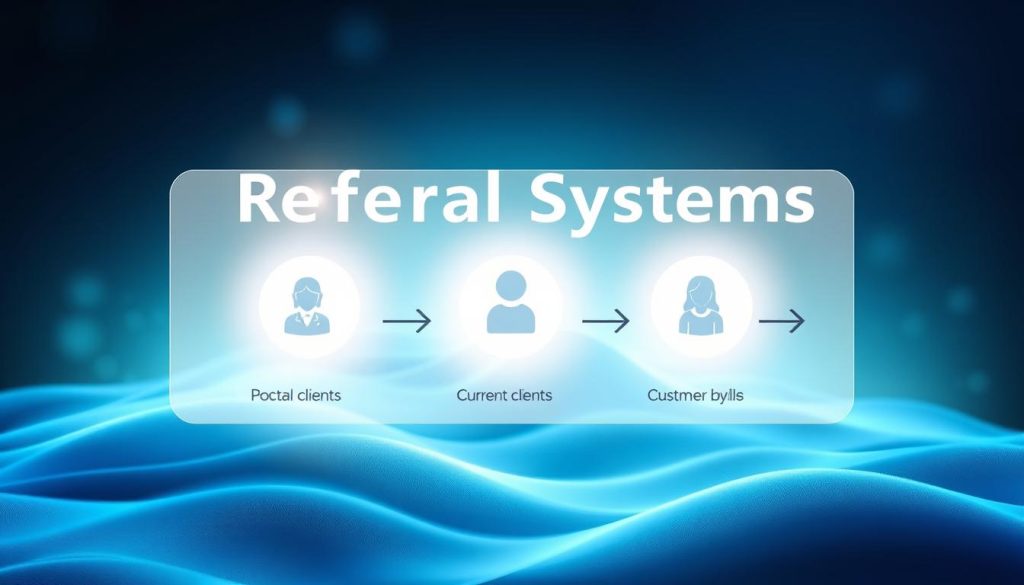
Implementing effective referral strategies requires careful planning. The right framework encourages natural recommendations. It makes advocacy easy and rewarding for everyone involved.
Creating Incentives That Encourage Client Recommendations
Incentive structures motivate people to share their positive experiences. The right rewards align with your audience’s values and preferences. They should feel generous without compromising profitability.
Effective incentive programs follow these proven principles:
- Offer meaningful value that justifies the referral effort
- Provide choices that accommodate different preferences
- Ensure simplicity in understanding and claiming rewards
- Maintain ethical standards that build trust
- Create win-win situations for referrers and new clients
Common incentive structures include:
- Service discounts or credit toward future work
- Cash rewards for successful referrals
- Charitable donations in the referrer’s name
- Exclusive access to premium content or events
- Physical gifts that reinforce brand connection
The timing of incentive delivery impacts effectiveness. Immediate acknowledgment maintains engagement. Final rewards should follow successful conversions.
Ethical considerations ensure long-term success. Avoid incentives that might encourage inappropriate recommendations. Transparency builds trust in your referral process.
Turning Satisfied Clients into Your Best Salespeople
Happy customers naturally want to share their positive experiences. They become authentic advocates who influence others effectively. Their genuine enthusiasm creates powerful social proof.
Systematic approaches transform satisfaction into active advocacy. Follow this framework for maximum impact:
- Identify your most enthusiastic and successful clients
- Create simple processes for sharing recommendations
- Provide tools that make advocacy easy and effective
- Recognize and appreciate active advocates regularly
- Maintain communication to sustain engagement
Advocacy tools might include:
- Pre-written social media posts they can share
- Email templates for personal introductions
- Case studies highlighting their success stories
- Referral links that track their recommendations
- Testimonial guides that make sharing easy
The timing of referral requests significantly impacts success. Approach clients after delivering exceptional results. Positive momentum increases willingness to recommend.
Communication templates maintain consistency while allowing personalization. They provide structure without sounding robotic. Customization ensures genuine connection.
Tracking systems measure referral program effectiveness. Monitor key metrics to optimize performance. This data guides continuous improvement.
| Referral Metric | Measurement Method | Optimization Strategy |
|---|---|---|
| Referral Rate | Percentage of clients making referrals | Improve incentive attractiveness |
| Conversion Rate | Percentage of referrals becoming clients | Enhance referral qualification process |
| Time to Conversion | Days from referral to conversion | Streamline onboarding experience |
| Lifetime Value | Total value from referred clients | Focus on quality referrals |
| Advocate Engagement | Frequency of referral activity | Maintain regular communication |
Testimonials and case studies strengthen referral effectiveness. They provide concrete evidence of your value proposition. Social proof builds confidence in new prospects.
Successful businesses leverage their client networks exceptionally well. A marketing agency increased referrals by 200% using structured systems. A consulting firm generated 40% of new business through client recommendations.
Regular feedback ensures your referral program remains effective. Survey participants about their experience. Use insights to refine your approach continuously.
Referral systems create sustainable growth through trusted relationships. They transform satisfied clients into active partners in your success. This approach builds lasting business expansion.
Tracking and Analyzing Your Client Acquisition Metrics
Data-driven decisions separate thriving businesses from guessing operations. Proper measurement transforms random efforts into strategic growth. Understanding your metrics provides clarity and direction for sustainable expansion.
Successful companies track performance religiously. They know which strategies deliver results and which need improvement. This analytical approach creates consistent client acquisition.
Key Performance Indicators for Growth Measurement
Essential metrics reveal your acquisition effectiveness. These indicators guide strategic decisions and resource allocation. Focus on measurements that directly impact your business objectives.
Critical KPIs include conversion rates across different channels. Track lead quality alongside quantity for better assessment. Cost per acquisition shows your marketing efficiency.
Customer lifetime value indicates long-term relationship potential. This metric helps justify acquisition investment decisions. It also guides service improvement efforts.
Create performance dashboards that display key metrics visually. These tools provide immediate insight into your acquisition health. They help identify trends and patterns quickly.
Effective dashboard templates include:
- Real-time conversion tracking across all channels
- Funnel visualization showing drop-off points
- Comparative analysis of different acquisition methods
- ROI calculations for various marketing investments
- Trend lines showing performance over time
Regular review schedules maintain metric awareness. Weekly analysis catches issues early. Monthly reviews assess broader patterns and progress.
Goal setting transforms data into action. Establish clear targets for each important metric. These objectives focus team efforts and measure success.
Milestone tracking celebrates progress toward larger goals. Small achievements maintain motivation during longer journeys. They provide encouragement while pursuing bigger targets.
Conversion Rate Optimization Strategies
Improving conversion rates maximizes existing traffic value. Better conversion means more clients from the same audience size. This efficiency boosts profitability significantly.
A/B testing identifies what resonates with your audience. This method compares different versions of your offers. Data reveals which approach converts better.
Effective testing strategies include:
- Clear hypothesis formation before each test
- Statistical significance determination for reliable results
- Single variable testing for accurate attribution
- Adequate sample sizes for meaningful conclusions
- Documentation of results for future reference
Testing should cover various acquisition elements. Landing page designs significantly impact conversion rates. Headline variations can dramatically change results.
Call-to-action wording affects response rates. Form length and field requirements influence completion rates. Offer structures change perceived value and conversion.
Data analysis techniques uncover hidden opportunities. Funnel analysis identifies where prospects drop off. This insight guides improvement efforts effectively.
Segmentation reveals different audience behaviors. Various groups may respond to distinct approaches. Personalized messaging often increases conversion.
Heat maps show how people interact with your content. They reveal what attracts attention and what gets ignored. This visual data guides layout improvements.
Session recordings provide qualitative insight into user behavior. They show real struggles and engagement patterns. These observations complement quantitative data.
Tools like Google Analytics offer comprehensive tracking capabilities. CRM systems provide client journey visibility. Specialized software delivers deeper testing functionality.
Reporting frameworks communicate performance effectively. Regular reports keep teams informed and aligned. They highlight successes and identify improvement areas.
Visual presentations make data more accessible and understandable. Charts and graphs simplify complex information. Dashboards provide at-a-glance performance assessment.
Metric-driven improvements show measurable results. One company increased conversions by 40% through systematic testing. Another business doubled lead quality using better tracking.
Alignment between metrics and objectives ensures meaningful measurement. Track what truly matters for your specific goals. Avoid vanity metrics that don’t impact real outcomes.
Continuous optimization becomes part of your culture. Regular testing and refinement maintain competitive advantage. This approach ensures ongoing improvement and growth.
Scaling Your Systems for Sustainable Growth
Sustainable growth requires systems that expand with your business rather than limiting it. The right frameworks allow you to handle increased demand without compromising quality. This approach transforms sporadic success into consistent expansion.

Many companies struggle when their initial success creates overwhelming demand. They lack the infrastructure to maintain their standards while growing. Systematic scaling prevents this common growth plateau.
Building Processes That Work Without Constant Oversight
Documented processes create consistency across your entire operation. They ensure every team member delivers the same high-quality experience. This standardization maintains your standards during expansion.
Effective process documentation follows these principles:
- Clear step-by-step instructions for repetitive tasks
- Visual aids and examples for complex procedures
- Regular updates based on team feedback and improvements
- Accessible storage for easy reference by all team members
- Quality control checkpoints to maintain standards
Automation tools handle routine tasks efficiently. They free your team to focus on high-value work that requires human judgment. This balance maximizes both productivity and quality.
Delegation strategies ensure proper task distribution. They match responsibilities with individual strengths and capabilities. This approach optimizes team performance and satisfaction.
Accountability systems track completion and quality. They provide clear metrics for evaluating process effectiveness. Regular reviews identify areas for improvement.
Team Development for Increased Capacity
Strategic hiring builds capacity for sustained growth. The right team members bring skills that complement existing strengths. This expansion allows you to handle more clients effectively.
Effective hiring criteria focus on both skills and cultural fit. Technical abilities ensure competent work delivery. Personality alignment maintains team cohesion and morale.
Team structure recommendations include:
- Clear role definitions with specific responsibilities
- Reporting relationships that facilitate communication
- Career progression paths that encourage retention
- Cross-training opportunities that build flexibility
- Regular skill development sessions
Leadership development prepares your organization for scaling. It creates managers who can oversee larger teams effectively. This foundation supports continued expansion.
Feedback systems gather input from your team regularly. They identify process improvements and resource needs. This information guides smart scaling decisions.
Technology integration enhances team capabilities significantly. The right tools streamline collaboration and task management. They provide visibility into work progress and resource allocation.
Successful scaling implementations show measurable results. Companies that systemize their operations typically achieve 30% higher growth rates. They also maintain better client satisfaction during expansion.
Measurement metrics track scaling effectiveness objectively. Key indicators include capacity utilization rates and quality maintenance scores. These metrics guide continuous improvement efforts.
Adapting to Market Changes and Client Evolution
Market dynamics shift constantly, requiring businesses to stay alert and responsive. Companies that adapt successfully maintain their competitive edge and client relationships. This agility separates thriving organizations from those that struggle.
Successful adaptation involves both external awareness and internal flexibility. You must monitor industry movements while evolving your own approaches. This dual focus ensures relevance and continued growth.
Staying Ahead of Industry Trends
Proactive trend monitoring prevents reactive scrambling. Establish systematic processes for tracking industry developments. This forward-looking approach positions your business for opportunities.
Effective market monitoring includes multiple information sources. Follow industry publications and thought leaders consistently. Attend conferences and participate in professional networks.
Data analytics tools provide quantitative trend insights. They reveal patterns that might not be immediately obvious. This data-driven approach complements qualitative observations.
Competitor analysis offers valuable benchmarking information. Understand how others in your space are adapting their work. Learn from both their successes and failures.
Innovation methodologies keep your offerings fresh and relevant. Regularly review and update your service portfolio. Introduce new solutions that address emerging client needs.
Scenario planning prepares for various market conditions. Develop contingency strategies for different possible futures. This preparedness reduces disruption during actual changes.
The table below shows effective trend monitoring approaches:
| Monitoring Method | Implementation Frequency | Key Benefits |
|---|---|---|
| Industry Reports | Quarterly review | Comprehensive market insights |
| Client Surveys | Biannual execution | Direct feedback on needs |
| Competitor Analysis | Monthly tracking | Benchmarking opportunities |
| Technology Scanning | Continuous monitoring | Early adoption advantages |
| Regulatory Updates | Weekly review | Compliance assurance |
Continuous Improvement Based on Client Feedback
Client input provides the most valuable improvement guidance. Their experiences reveal what works well and what needs adjustment. This feedback loop drives meaningful evolution.
Establish structured systems for gathering client insights. Regular surveys capture satisfaction levels and suggestions. One-on-one conversations provide deeper qualitative understanding.
Feedback analysis identifies patterns and priority areas. Look for common themes across multiple client responses. These patterns indicate where to focus improvement efforts.
Implementation planning turns feedback into actionable changes. Develop clear timelines for addressing identified issues. Communicate these plans to show clients their input matters.
Portfolio diversification manages risk during market shifts. Offer multiple service lines that appeal to different client segments. This approach provides stability when specific areas face challenges.
Communication during changes maintains client confidence. Explain adaptations clearly and highlight benefits for their business. Transparent dialogue builds trust through evolution.
Measurement frameworks track adaptation effectiveness. Key metrics include client retention during transitions and satisfaction with new approaches. These indicators guide ongoing refinement.
Successful companies demonstrate adaptive capabilities through real examples. A marketing firm shifted from traditional to digital services based on client needs. A consulting business expanded its offerings to address emerging industry challenges.
Continuous adaptation becomes part of your organizational culture. It ensures your business remains relevant and valuable to clients. This approach supports sustainable long-term success.
Conclusion: Implementing Your Unlimited Client Strategy
Your journey toward consistent client growth begins with action. The framework shared provides a clear path to attract and retain quality leads.
Focus on one strategy at a time. Build momentum through small, consistent steps. Track your progress and adjust based on real-world feedback.
Celebrate milestones to maintain motivation. This process transforms effort into lasting success. Your business deserves sustainable growth.
Start today with your strongest opportunity. Refine your approach as you gain experience. Consistent implementation creates remarkable results.