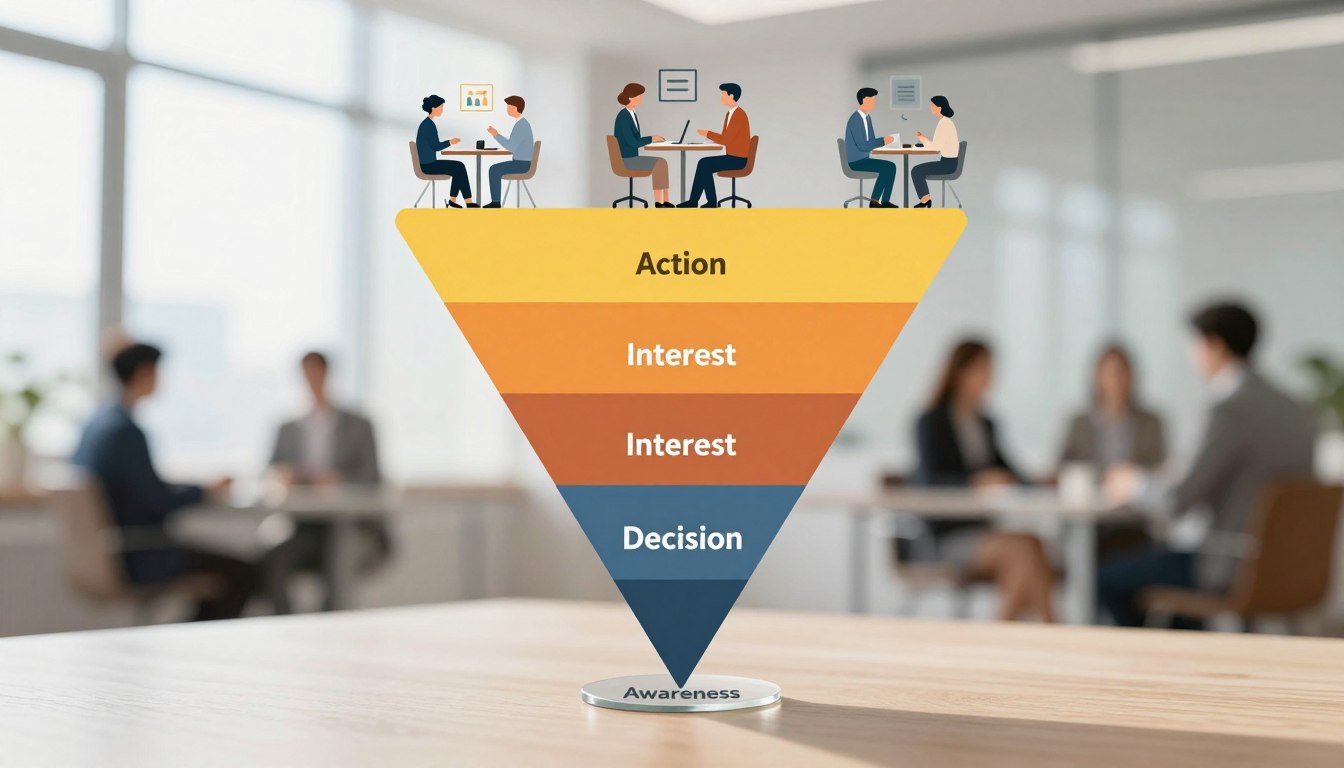
Start with a clear strategy. Map the path a prospect follows from first attention to final purchase. A simple funnel breaks the journey into stages and shows what each page, ad, or email must deliver.
Focus on the top of the funnel to attract the right audience. Use targeted content and lead generation tactics that match buyer needs. Track how people move through each stage so you can improve conversion.
Landing pages should give just enough information to prompt the next step. Use templates that let your company measure interactions across website, media, and email. This saves time and reveals where prospects stall.
Whether you target B2B or B2C, consistent engagement wins. A documented process helps teams run campaigns, optimize ads, and refine product messaging for better results.
Key Takeaways
- Define clear stages and what each page must achieve.
- Attract the right audience with focused content and ads.
- Use templates to track leads and measure interaction.
- Optimize email and landing pages based on movement through stages.
- Document the process so teams can scale and improve conversion.
Understanding the Fundamentals of a Sales Funnel
A clear visual map makes it easier to see where prospects enter and where they fall away.
What is a sales funnel? It is a stepwise process that shows how people move from attention to purchase. The funnel clarifies what each page, email, or ad must deliver at every stage.
The visual roadmap concept
The roadmap view helps a company assign roles and measure flow. Aaron Ross popularized an assembly line pipeline that treats lead movement like repeatable work. Jim Collins shifted thinking with a flywheel that emphasizes attracting and delighting customers.
Define clear stages so each lead gets the right information at the right time. Track interactions on your website and content to spot drop-off points and boost conversion.
- Define stages: awareness, interest, decision, purchase.
- Measure touchpoints: landing pages, email, media, ads.
- Refine: use data to tighten messaging and lead generation.
Why Your Business Needs a Structured Sales Funnel
Visibility into each stage of the funnel reveals which channels bring quality leads. When a company tracks where people enter and why they leave, marketing and sales stop guessing and start acting.
Without a defined process, interested customers can drop off before they make a purchase. A structured funnel captures information at each step so teams can deliver relevant content and email that address buyer needs.
Research shows companies that adopt a formal funnel increase sales velocity by about 20%. That gain comes from focusing time on prospects with clear intent.
- Prioritize leads: your sales team works smarter, not harder.
- Standardize handling: every lead receives consistent, professional attention.
- Optimize continually: website and media data reveal ways to lift conversion.
A clear funnel aligns marketing and sales around the same goal: move prospects from attention at the top toward purchase at the bottom, using the right content at each stage.
How to build your first sales funnel from scratch
List every touchpoint a buyer sees, then order those interactions as clear steps. Start with attention at the top and end with purchase at the bottom.
Create a dedicated landing page that captures contact information. Use that data for targeted email sequences and varied content such as blog posts and whitepapers.
Define when a lead becomes a prospect. Give your sales team clear criteria so valuable leads are pursued at the right time.
- Track progress with simple tools like Google Sheets.
- Test landing page variants to improve conversion.
- Use CRM data to refine the process over time.
| Step | Key Page | Metric | Action |
|---|---|---|---|
| Top (attention) | Blog / Ad | Traffic / CTR | Optimize content and ads |
| Middle (interest) | Landing | Leads captured | Nurture via email |
| Bottom (decision) | Product page | Conversion rate | Sales follow-up |
Defining Your Ideal Customer Profile
Pinpoint the traits and behaviors of people who convert most often. Start with clear demographic markers such as age, job title, and location. Add psychographic details like goals, pain points, and buying triggers.
Gathering demographic and psychographic data
Collect information through surveys, interviews, and CRM records. Use firmographics when targeting business clients so your company focuses on high-value opportunities.
Salesforce research shows a 30% lift in targeting accuracy when companies define buyer personas. That means your marketing and sales teams spend less time chasing unlikely leads.
- Survey current customers for common needs and purchase drivers.
- Interview top accounts to capture decision criteria and timelines.
- Segment prospects by behavior on website, landing page, and email.
Keep the profile current. Regular updates let the funnel evolve with market trends and improve conversion across stages.
Establishing Key Stages for Your Pipeline
Map clear milestones in your pipeline so every lead moves through purpose-driven stages. Define what information and actions mark a lead as qualified. That clarity keeps marketing and sales aligned.
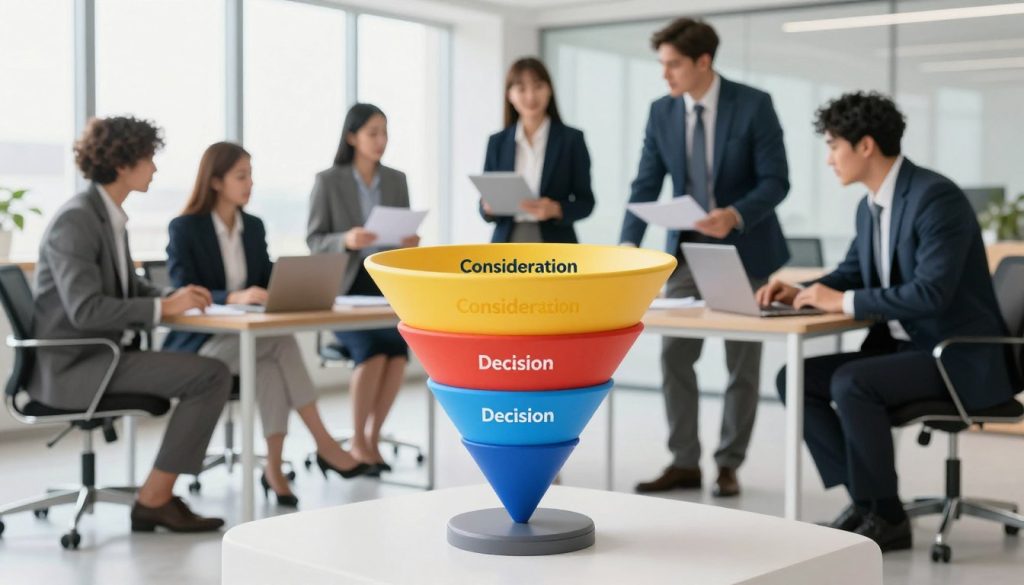
Defining lead criteria
Use simple qualifiers like BANT—Budget, Authority, Need, Timing. Apply these when a contact shows intent on a landing page or responds to an email.
Identifying prospect milestones
Set explicit checkpoints: lead captured, qualified, demo scheduled, proposal sent. Pair each checkpoint with the content or action needed to move prospects forward.
Tracking closed outcomes
Log wins and losses in your CRM. Capture why deals closed or stalled so the company refines messaging, product positioning, and follow-up.
- Agree on definitions so teams classify leads and prospects the same way.
- Monitor stuck prospects and add nurturing where conversion lags.
- Review stages regularly to improve forecasting and reduce wasted time.
| Stage | Action | Metric |
|---|---|---|
| Qualified lead | Apply BANT | Lead-to-prospect rate |
| Prospect | Send tailored content | Engagement % |
| Closed | Record outcome | Win/loss reasons |
Strategies for Effective Lead Generation

Pair inbound content with smart prospecting tools to keep a steady stream of leads. Use SignalHire and Hunter.io to verify contact details for target prospects.
Publish helpful blog posts and gated whitepapers on your website. These resources build brand trust and attract organic traffic that feeds the funnel.
Run targeted paid ads on platforms like Facebook to reach specific demographics. Combine ads with social media engagement to turn casual visitors into real leads.
Mix inbound and outbound tactics. Offer webinars or case studies that prompt visitors to share contact details. Then follow up using verified contacts from prospecting tools.
- Use SignalHire or Hunter.io for accurate contact discovery.
- Promote gated resources to capture lead information.
- Test social and paid channels to find best ROI.
- Engage regularly on social media to build trust.
| Channel | Primary Goal | Key Metric | Best Use |
|---|---|---|---|
| Content (blog/whitepaper) | Attract organic leads | Website traffic / downloads | SEO + gated forms |
| Prospecting tools | Find contact info | Valid emails / connects | Personal outreach |
| Paid ads & social | Drive targeted traffic | CTR / lead cost | Demographic targeting |
| Webinars | Nurture interested prospects | Registrations / attendees | Follow-up sequences |
Nurturing Prospects Through the Interest Stage
At the interest stage, timely guidance and relevant examples turn casual leads into engaged prospects. Deliver content that helps people solve specific problems and shows clear value in your company’s product.
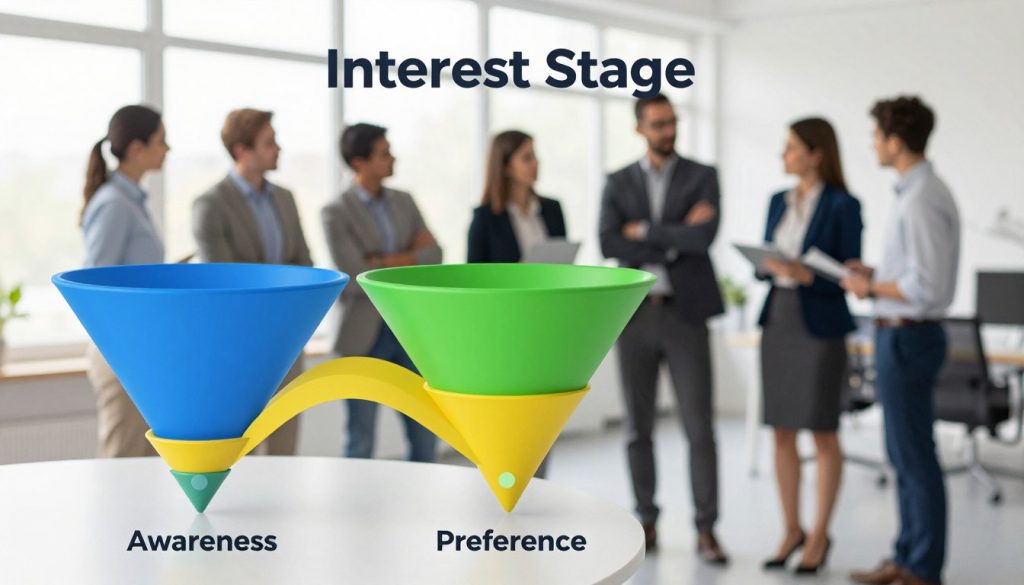
Email campaigns are essential. Send helpful tips, case studies, and short product updates that answer common questions. Keep messages personal and concise so recipients read and act.
Track interactions with each email and landing page. When a prospect opens multiple messages or downloads an eBook, that behavior signals readiness for a sales conversation.
Educational assets — webinars, eBooks, or short guides — build trust and reduce friction. A steady stream of useful content keeps your brand top of mind when prospects decide to purchase.
- Personalize messages based on behavior and interests.
- Use email sequences that escalate value, not pressure.
- Measure engagement to spot prospects ready for outreach.
| Action | Signal | Next Move |
|---|---|---|
| Open series of emails | High interest | Invite to webinar |
| Download eBook | Researching options | Send case study |
| Visit pricing page | Purchase intent | Schedule demo |
Converting Interest into Concrete Opportunities
A decisive call that asks for a meeting or demo converts casual interest into tangible opportunity.
Start with a clear CTA. Invite the prospect to a short demo, trial, or proposal review. Make the next step specific and easy to accept.
Offer tailored demonstrations that focus on the prospect’s use case. Show how the product saves time and delivers measurable ROI for their business.
- Send a concise follow-up email that references recent behavior and suggests a meeting time.
- Share a customized proposal or demo link that highlights benefits relevant to the prospect.
- Use customer testimonials and case studies to answer common objections quickly.
Keep communication open and frequent. Address remaining concerns directly and record feedback for the sales team.
| Action | What it shows | Best timing | Expected result |
|---|---|---|---|
| Schedule demo | High interest | Within 48 hours | Concrete next steps |
| Send tailored proposal | Qualified prospect | After demo | Faster decision |
| Follow-up email | Re-engagement | 24–72 hours post-contact | Increased conversion |
| Share case study | Social proof | When objections arise | Boosted confidence |
Tactics for Closing Deals at the Bottom of the Funnel
Final-stage tactics focus on removing friction and making a decision simple for prospects. At this point, clarity and speed matter more than extra features.
The ASK process
Align priorities. Confirm what matters most for the prospect and restate value in plain terms.
Secure a commitment. Offer a clear, time-limited option—trial, proposal, or discount—that makes agreement straightforward.
Keep the relationship alive. Whether the deal closes now or later, follow up with helpful content and timely check-ins.
Overcoming purchase barriers
Remove checkout friction by simplifying forms, offering multiple payment options, and showing trust signals.
Use limited-time bonuses and clear guarantees to create urgency without pressure. Address FAQs and provide concise support docs or short video walkthroughs.
Skilled reps negotiate terms that satisfy both the company and the customer while preserving margin and goodwill.
- Offer short incentives to nudge decisions.
- Keep email follow-ups personal and actionable.
- Track closed and lost outcomes to refine content and approach.
| Action | Purpose | Outcome |
|---|---|---|
| Limited-time offer | Create urgency | Faster decisions |
| Streamlined checkout | Reduce drop-offs | Higher conversion |
| Post-contact nurture | Maintain relationship | Future business |
Differences Between B2B and B2C Sales Funnels
Comparing B2B and B2C funnel designs shows clear contrasts in length, touchpoints, and goals.
B2B funnels often span longer cycles and involve several decision-makers. These funnels need detailed content such as whitepapers, case studies, and product demos. The level of sales rep involvement is higher. That human contact builds trust and answers complex questions.
B2C funnels tend to be shorter and more emotional. Brands rely on quick benefits, social proof, and influencer marketing. Purchases often happen through a self-service landing page and automated checkout.
Both models guide a prospect from awareness toward purchase. The key is tailoring marketing and content for the audience. A company selling software will favor long-form proof. A retail brand will focus on impulse triggers and clear value.
| Aspect | B2B | B2C |
|---|---|---|
| Cycle length | Long — weeks to months | Short — minutes to days |
| Decision-makers | Multiple stakeholders | Individual customers |
| Content focus | Whitepapers, demos, case studies | Ads, social, reviews |
| Sales involvement | High — personalized outreach | Low — automated purchase flows |
| Typical channel | Direct outreach, thought leadership | Social, paid ads, landing pages |
Leveraging Automation and Sales Technology
Automation turns repetitive touchpoints into measurable actions that keep leads moving forward. Use platforms like Zendesk to unify customer interactions across chat, email, and social channels. That single view reduces handoffs and keeps responses consistent.
Sales engagement tools capture and score leads automatically so reps focus on the best opportunities. Integrate your CRM with marketing systems and landing pages for seamless data flow and clearer reporting.
Benefits at a glance:
- Automated email sequences nurture prospects without constant manual work.
- AI personalization tailors messages, improving engagement and conversion.
- Documented interactions deliver insights that refine the funnel and marketing mix.
- Scalable automation handles high volumes of leads while saving time for relationship work.
| Capability | Impact | Tool example |
|---|---|---|
| Unified support | Faster responses, consistent customer experience | Zendesk |
| Lead scoring | Prioritized outreach, higher close rates | Sales engagement platform |
| CRM integration | Cleaner data, better funnel reporting | CRM + marketing stack |
Maintaining Long Term Customer Retention
Keeping buyers engaged after a sale turns single purchases into ongoing value. Follow-up emails and selective offers keep customers connected and encourage repeat business.
Create a simple post-sale plan. Send a welcome message, use exclusive discounts, and share useful product tips. These moves improve satisfaction and increase lifetime value.
Build a community where customers share experiences. Peer feedback creates trust and amplifies positive word-of-mouth. Use social media groups, forums, or periodic webinars.
Identify upsell and cross-sell opportunities by tracking usage and feedback. Offer complementary products that solve related problems without pressuring the buyer.
Excellent customer service is essential. Respond quickly, document issues, and follow up until the customer is satisfied. That care keeps people loyal.
- Gather feedback regularly and act on it.
- Use targeted email sequences for re-engagement.
- Measure repeat purchase rate and refine the funnel.
Conclusion
A focused summary helps leaders prioritize work that moves customers forward.
Start small and measure often. Define clear stages, use the right technology, and set simple tests that reveal what improves conversion. Keep iterations fast and document results.
Whether you sell to businesses or consumers, the same principles apply: attract interest, engage with useful content, and push toward the bottom with clear offers and follow-up.
Make a strong, focused plan for ongoing refinement. Track KPIs, listen to customers, and use data to turn effort into predictable revenue and long-term retention.