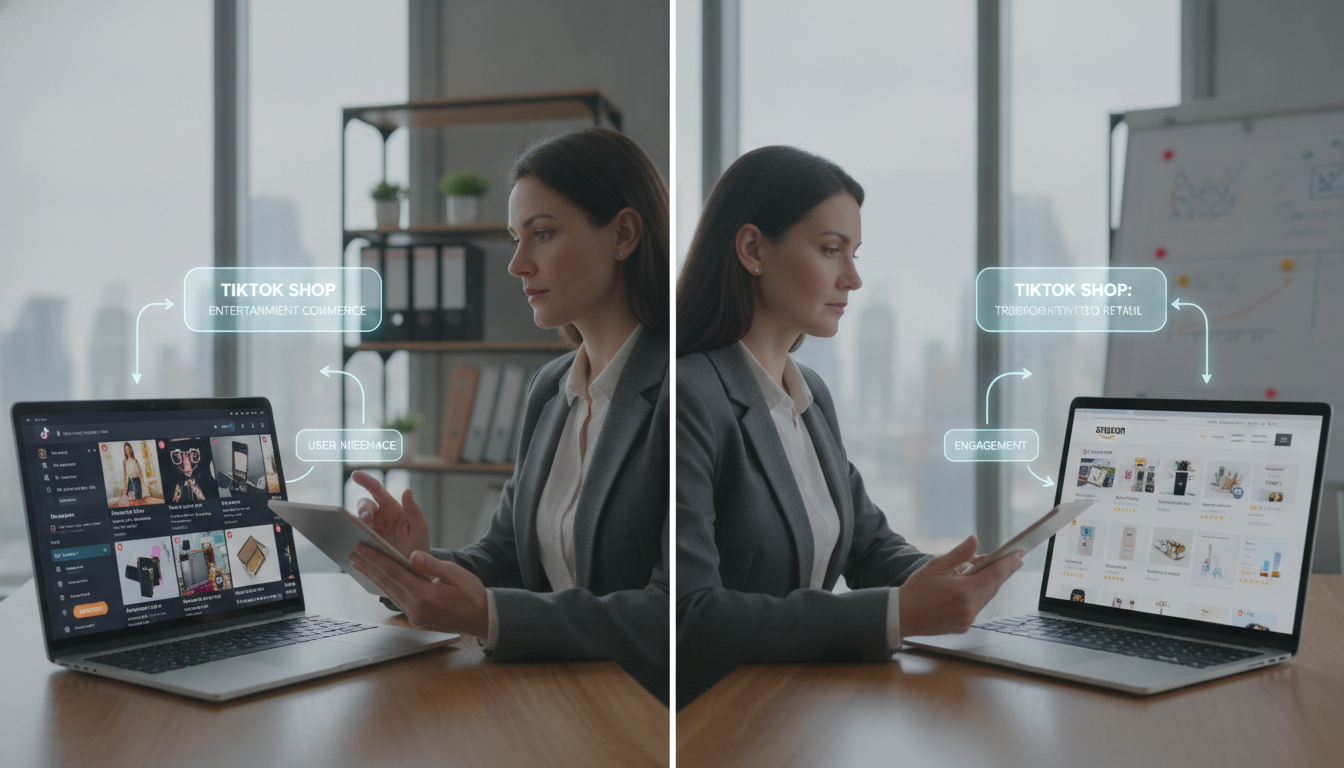
Brands face a clear choice in 2026: capture existing search demand or create product discovery through engaging content. Amazon remains a trusted marketplace with broad selection and strong buying intent. TikTok Shop connects entertainment, creators, and checkout in a single social commerce journey.
About 70% of Amazon activity centers on product-related searches. In contrast, roughly 70% of TikTok users discover new brands through content, and three out of four have purchased through TikTok Shop. These figures show how each platform attracts shoppers in a different way.
A Teikametrics comparison guide published April 1, 2026, frames TikTok Shop as more than another retail marketplace. Its model depends on creators, short-form media, and impulse-friendly discovery.
The right fit depends on product type, audience behavior, fulfillment capacity, advertising resources, and growth goals. This guide compares setup, listings, marketing, fees, shipping, trust, category fit, scalability, benefits, and drawbacks to support a confident commerce decision.
Key Takeaways
- Amazon captures shoppers with strong purchase intent.
- TikTok Shop builds demand through creators and content.
- Product category and audience behavior shape platform fit.
- Fulfillment capacity affects long-term performance.
- Advertising resources influence reach and sales efficiency.
- Each platform supports a distinct customer journey.
TikTok Shop vs Amazon: Which One Should You Use in 2026?
Choosing a sales channel depends on how buyers find products. Search-led shopping favors Amazon, while social discovery gives TikTok Shop a strong opening for trend-driven brands.
Quick Comparison for Brands and Sellers
| Factor | Amazon | TikTok Shop |
|---|---|---|
| Discovery | About 70% of product searches begin there. | About 70% of users discover new brands through content. |
| Buyer intent | High intent, broad selection, and reliable delivery. | Content-led interest and impulse-friendly shopping. |
| Best fit | Known products and repeat purchases. | Visual, demonstrable, or trend-responsive products. |
Three in four users have purchased through TikTok Shop. That result shows meaningful customer demand beyond entertainment. Amazon still generates far more revenue, with a mature marketplace and broad logistics network.
Why Most Businesses Should Consider Both Platforms
Growth-focused brands can create demand through social content, then capture high-intent searches on Amazon. This approach expands visibility across different audiences.
A dual-platform plan needs shared inventory, pricing, marketing, ads, customer care, and account controls. Treating each channel as a separate experiment can cause stock gaps and uneven service.
How TikTok Shop and Amazon Approach Online Commerce
Online buying begins in two different moments: a planned search or a sudden discovery. Each platform follows a distinct commerce model, so sellers need separate plans for visibility, trust, and conversion.
Discovery-Driven Social Commerce on TikTok Shop
About 70% of users discover new brands through TikTok content. An algorithm places products inside entertainment, often before buyers feel a clear need. A creator can build interest through demonstrations, reviews, and timely cultural trends.
This social commerce approach creates intent before checkout. Trends may surge and fade within days, so content teams need fast testing and fresh ideas. Standard product listings and paid ads alone rarely match this environment.
Search-Driven Marketplace Shopping on Amazon
About 70% of product-related searches start on Amazon. Shoppers often enter with a clear goal, then compare price, relevance, reviews, and delivery. Strong listings and reliable service help capture existing demand.
That marketplace rewards steady search optimization, while the social platform rewards engaging stories. Sellers need different creative, ranking, and conversion plans for each audience.
| Commerce model | Buyer behavior | Core priority |
|---|---|---|
| Social discovery | Incidental product interest | Creator storytelling |
| Marketplace search | Planned product research | Relevance and reviews |
Audience Reach and Buyer Intent
Audience fit often determines whether a product earns attention or steady sales. Age, lifestyle, price, and purchase habits all shape the path from discovery to checkout.
TikTok’s Gen Z and Millennial Audiences
TikTok Shop strongly attracts Gen Z and Millennial shoppers who follow trends, creators, demonstrations, and niche products. About 70% of TikTok users discover new brands through content. Also, three out of four users have purchased through TikTok Shop.
This audience may begin with low buying intent, yet strong storytelling can create desire quickly. Visual products, accessible price points, and timely trends often gain the fastest response.
Amazon’s Broad, High-Intent Customer Base
Amazon reaches families, older adults, and shoppers across many categories. Its broad audience supports household goods, electronics, beauty items, and repeat-purchase products.
Buyers often arrive with a defined need, shopping list, or product in mind. That high-intent behavior gives brands a reliable platform for planned purchases and customer retention.
Brands can compare the likely discovery path before selecting a channel. Trend-led products may fit TikTok Shop, while practical products with repeat demand may perform better on Amazon.
Seller Setup and Account Requirements
Launching a marketplace presence starts with paperwork, verification, and clear operating roles. TikTok Shop offers a relatively accessible path: sellers create a business account, register the shop, upload a product, configure payments, and complete seller verification.

Amazon follows a more structured route. Sellers generally open a Professional Seller Account, prepare business documents, and review product eligibility rules. Brand registration can protect listings and support catalog control. Listing data, compliance checks, tax details, and fulfillment plans also need attention before launch.
Before either platform goes live, sellers should confirm inventory ownership, shipping duties, return terms, and customer support coverage. These steps reduce delays and prevent inconsistent records across sales platforms.
Early integration improves control. Ordoro offers a 15-day free trial without a credit card. Its inventory management app holds a 4.9-star rating and supports hundreds of Shopify, TikTok, Amazon, and WooCommerce sellers.
Eva Commerce connects TikTok Shop Management, Amazon Management, and Marketplace Expansion. This link helps brands avoid account, inventory, and fulfillment silos.
Product Listings and Catalog Optimization
Strong catalog planning turns casual interest into measurable sales. Each platform rewards a different path to purchase, so brands need tailored optimization rather than copied listings.
Video-First Product Content for TikTok Shop
TikTok Shop listings need short-form videos that show the use case within seconds. Demonstrations, creator proof, natural captions, and relevant hashtags can build trust before a viewer plans to buy.
The algorithm favors creative videos and active engagement. Trends may shift within days, so rapid testing helps sellers find strong hooks. Clear scenes, honest claims, and simple calls to action improve product visibility.
Search-Optimized Listings and Reviews on Amazon
Amazon optimization centers on precise titles, detailed descriptions, sharp images, keyword relevance, and A+ Content. About 70% of product-related searches start there, making search clarity essential.
Ranking also reflects relevancy, conversion rates, and reviews. Imagery alone cannot secure steady reach. Adapt a shared catalog for each platform: social content should earn attention, while marketplace detail should support research and confidence.
| Channel | Primary asset | Optimization focus |
|---|---|---|
| TikTok Shop | Short videos | Demonstrations and creator engagement |
| Amazon | Listing detail | Relevance, conversion, and reviews |
| Both | Accurate catalog data | Consistent pricing and availability |
Marketing, Creators, and Advertising Tools
Commerce growth often starts with trust, not a media budget. Social selling rewards brands that turn attention into useful, relatable content before asking for a sale.
Creator Partnerships, Affiliates, and Live Shopping
On TikTok Shop, creators act as the main distribution and trust layer. Affiliates earn commissions by sharing authentic demonstrations, while live shopping adds real-time questions, proof, and urgency. Short videos can introduce a product, explain its value, and invite community response.
TikTok supports In-Feed Ads, Branded Hashtag Challenges, Branded Effects, and the AI-driven GMV Max campaign format. Standalone shopping ads have been phased out. Teikametrics, a TikTok Marketing Partner, offers relevant tools for sellers and brands.
Sponsored Ads, Brand Campaigns, and DSP
Amazon offers Sponsored Products, Sponsored Brands, Display Ads, and Amazon DSP. These ads fit search-led journeys and support visibility across product pages, audiences, and campaigns.
Why Ad-Only Plans Can Struggle
Polished advertising may miss audiences expecting conversational creators, cultural relevance, and community-led content. Ads rarely solve weak demand, limited social proof, or poor creator coverage.
- Build organic content and test attention hooks.
- Activate creators and affiliates.
- Amplify winning videos with paid ads.
- Retarget viewers and improve conversion pages.
Fees, Commissions, and Selling Costs
Profit depends on the full cost of each sale, not just the headline rate. A clear margin model helps brands protect cash flow as order volume grows.
Creator Costs Can Shape Social Commerce Margins
TikTok Shop commissions may range from about 1% to 3%, depending on promotions. Yet the total cost can rise after creator payments, affiliate commissions, samples, discounts, video production, and paid amplification.
Lower commission does not always mean higher profit. Sellers need to track product margin, average order value, returns, shipping, and ad efficiency. Small hidden costs can weaken a fast-growing campaign.
Marketplace Charges Extend Beyond the Referral Rate
Amazon may charge referral fees, Fulfillment by Amazon fees, storage charges, advertising costs, promotion expenses, and service fees. These costs can vary by category, size, weight, season, and inventory age.
“A sale is valuable only after every operating cost has been counted.”
Ordoro offers a 15-day free trial without a credit card. This gives a business time to test inventory and shipping workflows before adding software expense.
| Cost area | Social commerce | Marketplace selling |
|---|---|---|
| Core charge | About 1%–3% commission | Referral fee |
| Extra expenses | Creators, samples, and content | Fulfillment, storage, and promotions |
| Key metric | Contribution margin per sale | Total landed cost per order |
Fulfillment, Shipping, and Inventory Management
Reliable fulfillment turns sudden demand into lasting customer trust. Social sales can rise within hours, so inventory, labor, and shipping plans must move at the same pace.

Managing Viral Demand and Third-Party Logistics
A creator video can lift product demand faster than a seller can restock. TikTok Shop sellers need flexible forecasts, safety stock, fast replenishment, and dependable third-party logistics. Clear service processes also help manage order updates, returns, and customer questions.
Shipping fees and delivery times on TikTok Shop vary by seller and location. Brands must confirm capacity before scaling ads or creator activity. A strong content spike can strain available stock, packing teams, and return handling.
Fulfillment by Amazon and Delivery Expectations
Amazon FBA stores products, manages shipping, and handles returns for sellers. This standardized network supports predictable delivery and a familiar marketplace experience for customers.
Ordoro’s inventory management app holds a 4.9-star rating and serves hundreds of sellers. Its tools connect orders, stock levels, shipping status, and channel forecasts. Better visibility helps protect service during fast growth.
Customer Service, Reviews, and Buyer Trust
Confidence grows when a purchase feels safe from checkout through delivery. The tiktok shop amazon comparison shows a clear trust gap. TikTok Shop remains relatively new, so platform standards, seller history, and buyer expectations continue to develop.
Amazon has mature systems for reviews, returns, delivery updates, and customer feedback. Reddit users often point to its reliable shipping network when comparing both marketplaces. That structure can reduce risk when buyers consider unfamiliar brands.
Before buying from a newer TikTok Shop store, check seller ratings, reviews, return rules, delivery estimates, and product details. Clear content also helps prevent confusion about size, materials, and expected results.
Viral content creates urgency for sellers. Delays, stockouts, unclear descriptions, or uneven quality can quickly lead to poor reviews. Fast customer replies and honest solutions protect trust, support repeat sales, and preserve creator relationships.
- Review seller ratings before checkout.
- Confirm delivery dates and return terms.
- Compare product details with customer feedback.
- Track reviews after each sales campaign.
Product Categories and Business Fit
Product category shapes the best path to market. Trend-led goods need rapid attention, while practical items often benefit from steady search demand and repeat shopping.

Products That Perform Well on TikTok Shop
TikTok Shop attracts a younger audience interested in beauty items, fashion accessories, household discoveries, novelty products, and trend-responsive goods. A creator can show a product in action within seconds, helping buyers understand its value before traditional research begins.
- Choose visual products with clear demonstrations.
- Test strong hooks through short videos.
- Track creator fees, returns, and stock needs.
Categories Suited to Amazon Search and Reorders
Amazon supports broad demand for electronics, groceries, household essentials, branded goods, and replenishable products. About 70% of product-related searches start there, making it suitable for planned shopping and repeat orders.
Trends may rise and fade within days. Brands need to assess review requirements, inventory stability, repeat-purchase potential, and audience fit before selecting either platform or expanding across both. Category fit protects margins and improves long-term commerce results.
| Product type | Best initial channel | Primary reason |
|---|---|---|
| Beauty and novelty goods | TikTok Shop | Visual discovery and creator proof |
| Electronics | Amazon | Search demand and detailed research |
| Groceries and essentials | Amazon | Reorders and dependable availability |
Growth Potential, Scalability, and Revenue Strategy
Revenue paths differ across the tiktok shop amazon landscape. Social commerce can create fresh demand, while a mature marketplace captures buyers who already know what they want. The strongest growth plan often connects both paths.
Using TikTok Shop to Create New Product Demand
Creators, live shopping, affiliate activity, and viral video content can introduce a product to new audiences. Frequent testing reveals stronger hooks, formats, and offers. This rapid growth can lift sales quickly, but demand may change without warning.
Teikametrics combines creator-led commerce, performance insights, affiliate strategy, and paid-plus-organic optimization. That approach helps brands connect content, advertising, and sales results.
Using Amazon to Capture Search Demand and Scale Operations
About 70% of product-related searches start on Amazon. FBA, catalog systems, reviews, pricing tools, ads, and repeat purchases support steady marketplace expansion. Revenue far exceeds social commerce revenue because of its broad customer base and established presence.
Eva Commerce links TikTok Shop Management, Amazon Management, and Marketplace Expansion. Cross-channel visibility helps brands coordinate inventory, profitability, customer outcomes, and broader shopping coverage. Direct discovery-led growth toward social commerce, then guide mature search demand and reorders toward the marketplace.
Advantages and Drawbacks of TikTok Shop
Social commerce offers a fast route from attention to checkout. TikTok Shop provides accessible setup, relatively low commissions, and direct access to younger audiences. Creator partnerships, live events, and viral video campaigns can bring fresh traffic without relying only on search rankings.
Small businesses have reported sharp sales increases after joining challenges or responding to viral trends. Results still depend on product fit, creative quality, inventory, and customer care. In the tiktok shop amazon comparison, this channel stands out for discovery and rapid growth.
- Integrated checkout shortens the social buying journey.
- Creators can add proof and reach niche audiences.
- Compelling content can attract new customers quickly.
- Lower platform costs may support early testing.
However, demand can change as trends fade. Sellers need frequent content, quick replies, and flexible stock planning. Shipping fees and delivery times vary by seller and location. Buyer reviews and platform trust also remain less mature than established marketplace systems.
This channel fits brands ready to publish often, work with creators, manage sudden sales, and protect service quality. A limited product range or weak content plan can reduce returns. Fast reach brings opportunity, but it also demands fast execution.
Advantages and Drawbacks of Amazon
Amazon gives brands access to a broad, mixed-age customer base with strong purchase intent. Its extensive selection, trusted checkout, mature reviews, and repeat-order potential support steady sales. Buyers often arrive with a clear need, making the marketplace valuable for products with proven search demand.
FBA stores products, manages shipping, and handles returns. This structure gives customers more predictable delivery than the creator-led TikTok Shop model. Strong listing optimization, accurate stock, and review development can also improve ranking.
“Reliable operations turn marketplace demand into lasting customer value.”
Advertising can scale reach through Sponsored Products, Sponsored Brands, Display Ads, and Amazon DSP. However, referral fees, fulfillment charges, storage costs, and ad competition can reduce margins. Catalog rules also demand careful data control and steady operational discipline.
In the tiktok shop amazon comparison, Amazon may be the stronger first platform when customers already search for a category and brands can maintain reliable supply. TikTok Shop suits creator-led discovery, while Amazon rewards retail fundamentals.
| Advantage | Business value | Main challenge |
|---|---|---|
| FBA logistics | Predictable delivery and returns | Fulfillment and storage fees |
| Search demand | High-intent buyers | Strong advertising competition |
| Reviews | Greater buyer confidence | Ongoing service discipline |
Conclusion
The strongest 2026 channel depends on operating fit, not platform popularity. Amazon suits brands with established search demand, broad categories, reliable inventory, and repeat-purchase potential. It also rewards teams that can manage listings, reviews, fees, fulfillment, and customer care.
TikTok Shop fits visually demonstrable products. Brands need authentic content, creator partnerships, trend awareness, and flexible stock planning. This model creates demand through discovery, while Amazon captures demand from shoppers actively searching for products.
Many businesses can benefit from both channels. Shared inventory, profit tracking, customer service, advertising, and catalog controls help create a stronger commerce system.
Ultimately, the best decision rests on product fit, audience intent, operational readiness, and consistent execution. Choose the channel that matches the brand’s ability to deliver value from discovery through delivery.