

Etsy is a top marketplace for handmade goods, vintage treasures, and craft supplies. Millions of buyers visit daily, making it a great place for creative entrepreneurs. Whether you’re crafting jewelry, designing printables, or restoring vintage finds, an Etsy shop can turn your passion into profit.
Launching a successful small business here requires strategy. You’ll need a solid plan for niche research, branding, and marketing. This guide breaks down the essentials—from setting up your shop to attracting loyal customers.
New sellers often face challenges like standing out in a crowded market or navigating fees. With the right approach, these hurdles become stepping stones. Let’s explore how to build a thriving storefront.
Key Takeaways
- Etsy specializes in handmade, vintage, and craft items.
- A clear niche boosts visibility and sales.
- Shop setup includes branding and policies.
- High-quality photos and descriptions drive conversions.
- Marketing tools like SEO and social media help growth.
Introduction to Selling on Etsy
With 95 million active buyers, Etsy offers a massive marketplace for creative entrepreneurs. Annual merchandise sales exceed $13.3 billion, making it a powerhouse for niche products. Unlike broader platforms, it caters specifically to handmade, vintage, and craft items.
Why choose Etsy over alternatives? The platform’s built-in audience sets it apart. While Shopify requires independent marketing, and eBay leans toward mass-produced goods, Etsy connects sellers with buyers seeking unique items.
| Platform | Focus | Audience | Best For |
|---|---|---|---|
| Etsy | Handmade/Vintage | Niche shoppers | Artisans, crafters |
| Shopify | General eCommerce | Brand-focused | Scalable businesses |
| eBay | Auction/Retail | Bargain hunters | Resellers |
Demographics reveal 87% of shops are female-owned, and 97% operate from home. The mobile-friendly interface and etsy help resources simplify managing a storefront. Sellers also benefit from low upfront costs compared to physical retail.
Part-time entrepreneurs average $2,500 in first-year revenue. One jewelry maker doubled her income within six months by leveraging Etsy’s SEO tools. For those started etsy as a side hustle, growth potential is significant.
Researching Your Etsy Business Niche
Strategic research transforms hobbyists into profitable Etsy entrepreneurs. With 4.4 million active sellers, standing out requires pinpointing underserved markets. Tools like *Marmalead* and Etsy’s Trending Searches reveal high-demand, low-competition keywords.

Identifying Your Product Strengths
Start by validating your ideas. A candle maker boosted sales 300% by switching from generic scents to zodiac-themed designs. Use *Erank* to:
- Analyze search volume for terms like “personalized jewelry.”
- Compare competitor pricing and review patterns.
- Test sustainability or customization as unique selling points.
Analyzing Market Demand and Competition
Gap analysis uncovers opportunities. Combine filters like “handmade” + “pet accessories” to spot trends. Reverse-engineer top shops’ strategies—note their photo styles and keyword-rich titles.
Legal checks matter too. Avoid restricted items (cosmetics, food) and trademarked phrases. Research prepares sellers for business license requirements based on location and product type.
Legal and Financial Preparation
Legal compliance and financial planning form the backbone of a sustainable Etsy business. Overlooking fees or regulations can lead to penalties or unexpected costs. Proactive preparation ensures smooth operations and protects your creative venture.
Understanding Etsy’s Fees and Policies
Etsy charges multiple fees per transaction. These include listing, transaction, and payment processing costs. A $50 sale incurs approximately $5 in total fees.
| Fee Type | Cost | Example ($50 Sale) |
|---|---|---|
| Listing | $0.20/item | $0.20 |
| Transaction | 6.5% | $3.25 |
| Payment Processing | 3% + $0.25 | $1.75 |
Colorado sellers, for instance, need a $29 home occupation permit. Always check local business license requirements before launching.
Business Licenses and Insurance Requirements
Thirty-four states mandate sales tax permits for online sellers. California’s threshold is $500k annually, while Texas requires permits regardless of revenue.
- Product liability insurance: Covers damages ($1M typical).
- Annual premiums range $500–$1,200 for micro-businesses.
- Separate business/personal accounts for clean recordkeeping.
For insurance help, consult providers like Hiscox or Next. They specialize in low-cost coverage for home-based businesses.
How to Start Selling on Etsy: Setting Up Your Shop
Launching your storefront is the first step toward turning creativity into commerce. A polished shop builds credibility and helps products stand out. Follow these steps to set shop foundations that attract buyers.

Creating Your Seller Account
Convert a personal account or open shop as a new etsy seller. Verify your tax ID during signup—this avoids delays later. Use a business email for professional communication.
Choosing a Memorable Shop Name
Names must be 4–20 characters with no spaces. Try this formula: [Adjective] + [Noun] + [Product]. Example: “CoastalClayPottery.” Include keywords like “handmade” or your location for SEO.
Customizing Your Storefront
Upload a 3360x840px banner and 500x500px logo. Tools like Canva simplify design. Test mobile previews—60% of Etsy traffic comes from phones.
- About section: Share your story to connect with buyers.
- Policies: Clarify shipping, returns, and customization rules.
- Announcements: Highlight promotions or new arrivals.
Complete these steps to set shop up for visibility and sales. Strong branding makes your store memorable.
Crafting Your First Product Listings
Great listings combine eye-catching visuals and strategic keyword placement. Your first product sets the tone for your shop’s credibility. Optimize every element—from titles to tags—to maximize visibility.

Writing Compelling Descriptions with Keywords
Use Etsy’s search suggest tool to find high-traffic phrases. For example, “personalized dog collar” outperforms generic terms. Structure descriptions with:
- Features: Materials, dimensions, care instructions
- Benefits: Why buyers need this item
Highlight customization options. A jewelry seller increased conversions by 40% after adding “engraving available” to titles.
Photography Tips for Showcasing Products
Images drive 90% of purchase decisions. Follow these rules for showcasing products:
- Use 2700px wide photos at 85% compression
- Shoot with LED panels and foam boards ($50 setup)
- Include lifestyle shots (e.g., necklace on model) and white-background close-ups
Video demonstrations boost engagement. Keep them under 15 seconds.
Competitive Pricing Strategies
Price products using this formula: (Materials + Labor) x 2 + Fees. Test different price points—a stationery shop found $22 notebooks outsold $18 ones by 27%.
Consider free shipping. Listings with this filter get 20% more clicks. Bake costs into your base price.
Configuring Etsy Payments and Getting Paid
Seamless payment setup ensures your creative business gets paid promptly. Etsy supports credit cards, PayPal, and buy-now-pay-later options like Klarna. Choose deposit schedules that align with cash flow needs—daily, weekly, or monthly.
Setting Up Etsy Payments
Link your bank account during shop activation to avoid delays. Enable two-factor authentication for security. Daily transfers incur a $1 fee, while weekly or monthly are free.
International sellers may require additional steps. The platform handles conversions for 45+ currencies automatically. Always verify bank details to prevent deposit issues.
Tax and Bank Account Information
U.S. sellers must submit a W-9 form to comply with IRS rules. Keep business and personal accounts separate for clean records. Off-platform transactions violate policies and risk account suspension.
- Tax forms: Complete before reaching $600 in sales.
- Deposit delays: Resolve by confirming account/routing numbers.
- Currency fees: Factor in 2.5% conversion charges for global sales.
With these steps, your shop will get paid reliably. Monitor deposits in the “Finances” tab to track earnings.
Shipping and Handling Best Practices
Efficient shipping strategies turn first-time buyers into repeat customers. Smooth shipping handling builds trust, while delays or damaged items harm your shop’s reputation. Optimize every step—from packaging to tracking—to stand out in a competitive marketplace.
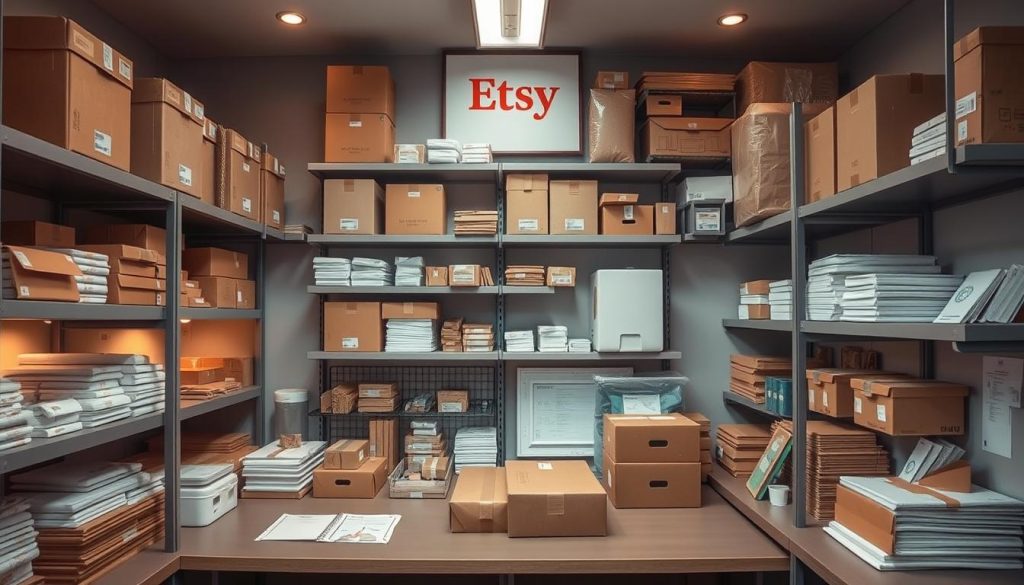
Creating Shipping Profiles
Etsy’s shipping options let you preset rates by product type. Use regional rate boxes for savings—USPS Priority Mail discounts cut costs by 30%. Example:
| Box Type | Weight Range | Savings vs. Retail |
|---|---|---|
| Regional A | 1–15 lbs | 25% |
| Regional B | 16–20 lbs | 30% |
Tools like Shippo compare carriers in real-time. Pirate Ship offers free UPS discounts for lightweight packages.
Packaging for Safety and Brand Appeal
Unboxing experiences matter. A customer receiving a $25 candle in a branded box is 50% more likely to repurchase. Balance cost and impact:
- Budget-friendly: Kraft mailers ($0.85/unit) with custom stickers.
- Premium: Foil-stamped boxes ($1.25/unit) with tissue paper.
For fragile items, use bubble wrap or corrugated inserts. Test drops from 3 feet to ensure safety.
Managing Orders and Customer Communication
Proactive updates reduce “where’s my order?” messages. Automate tracking emails via Etsy’s system. Respond within 24 hours to inquiries—fast replies boost review scores.
Include a thank-you card with care instructions. Templates with your shop name add a personal touch. Handle delays transparently; offer discounts on future orders if mistakes occur.
Marketing Your Etsy Shop for Success
Visibility drives sales—strategic promotion separates thriving shops from stagnant ones. Paid ads and organic reach work together to promote Etsy listings effectively. Focus on platforms where your ideal buyers spend time, like Pinterest or Instagram.

Leveraging Social Media and Etsy Ads
Etsy Ads deliver a 3–5x return for top sellers, averaging $2.50 per click. Combine these with organic efforts for maximum impact:
- Pinterest SEO: Target long-tail keywords like “rustic wedding favor ideas” instead of generic terms.
- Instagram Reels: Post behind-the-scenes clips every Tuesday/Thursday—a content calendar ensures consistency.
- Ad bidding: Use automatic budgets for new listings, switch to manual after gathering data.
Micro-influencers amplify reach. Offer free products in exchange for posts—their engaged followers often convert to buyers.
Building Customer Loyalty with Reviews
Listings with 10+ reviews convert 58% better. Encourage feedback without being pushy:
- Send a post-purchase email sequence with care instructions and a discount for future orders.
- Include a handwritten note: “Love your item? Share your thoughts!” with a direct review link.
A content marketing writer can craft compelling product stories that resonate. Highlight customer testimonials in listings to build trust instantly.
Managing and Growing Your Etsy Business
Sustainable growth on Etsy requires balancing daily operations with long-term strategy. Tracking metrics and expanding product lines turn part-time ventures into profitable small businesses. Focus on systems that streamline workflows while maintaining quality.
Tracking Sales and Financial Health
Etsy’s Star Seller program rewards shops with 95% response rates and 4.8+ star reviews. Use analytics to interpret visit-to-sale conversions. A 3% rate is average; below 1% signals listing issues.
EU sellers surpassing €10k in sales must register for VAT. Tools like QuickBooks sync with Etsy to automate tax tracking. Separate business accounts simplify expense reports and profit calculations.
| Inventory Tool | Best For | Cost |
|---|---|---|
| Spreadsheets | Under 50 SKUs | Free |
| TradeGecko | 100+ SKUs | $39/month |
| Etsy’s Built-in | Basic Tracking | Included |
Scaling Your Product Line and Operations
Test complementary items via pre-orders before full production. A jewelry designer added matching earrings after 80% of necklace buyers requested them. Low-risk expansions validate demand.
Hiring contractors? Use platforms like Upwork for independent craft assistants. Draft clear agreements covering intellectual property and hourly rates. Transition to wholesale marketplaces like Faire after consistent sales.
- Wholesale prep: Bulk pricing sheets and MOQ (minimum order quantity) policies.
- Quality control: Checklists for outsourced production batches.
- Marketing sync: Align wholesale catalogs with Etsy shop branding.
To maintain Etsy’s standards while scaling, automate repetitive tasks. Tools like Printful handle fulfillment for print-on-demand shops. Growth should enhance—not overwhelm—your creative process.
Conclusion
Building a thriving Etsy shop takes strategy, not luck—focus on steady progress. Map your first 90 days: refine listings in month one, launch ads in month two, and analyze metrics by month three. Tools like eRank and the Etsy Seller Handbook simplify this journey.
Ready to sell on Etsy? Celebrate small wins—your first 10 sales prove demand. Then, explore wholesale or social media collaborations. Perfection isn’t required; consistent improvements drive results.
Stay compliant. Set calendar reminders for quarterly taxes and annual license renewals. Now, get started—your creative business awaits.


