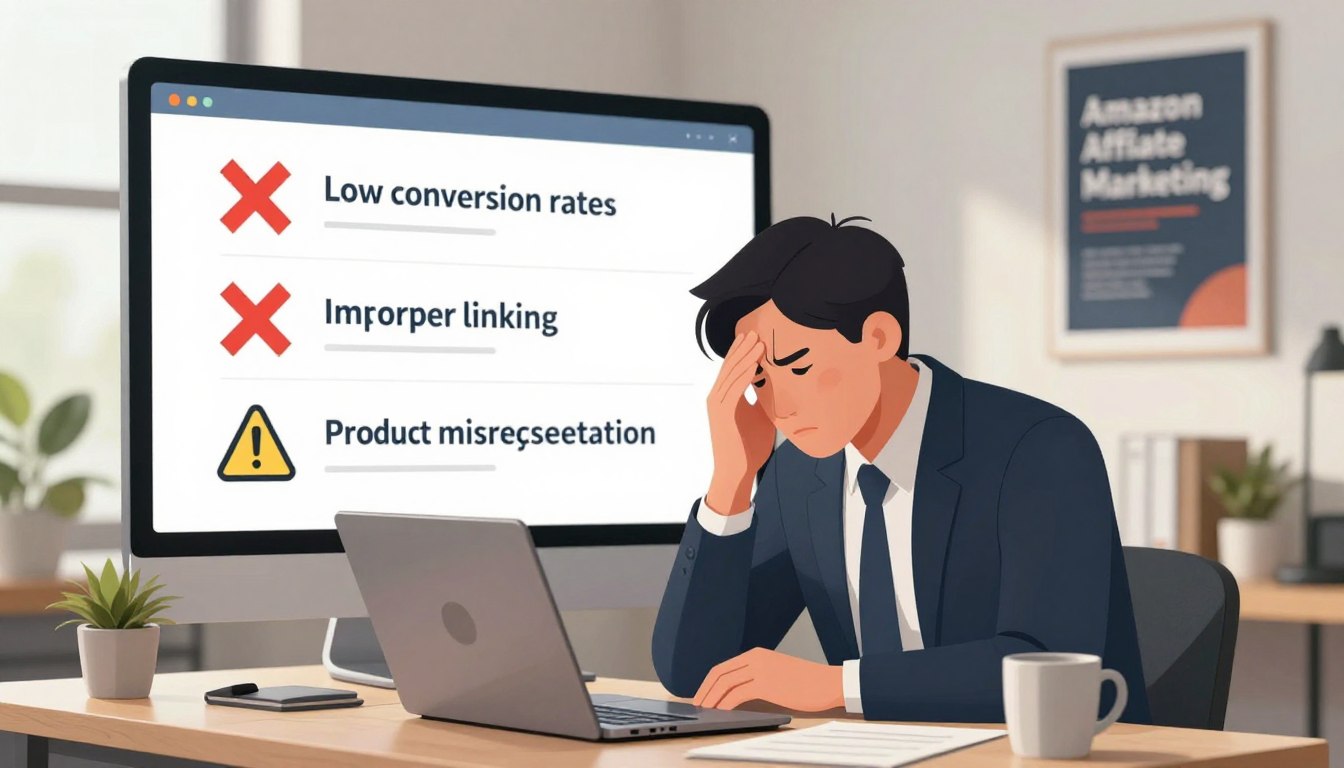
Understanding the pitfalls in the affiliate marketing world is essential for anyone aiming to thrive in the Amazon Associates program. Many individuals jump into this field with high hopes, yet only a small percentage ever earn substantial income. This stark reality highlights the importance of recognizing and addressing the errors that can hinder success.
With nearly a million affiliate publishers competing for attention, the stakes are high. Recent data shows that 83% of consumers trust recommendations from acquaintances over branded content. This underscores the necessity for affiliates to build trust and credibility. Furthermore, Amazon’s increased compliance enforcement means staying informed about the latest rules is more crucial than ever.
This article serves as a comprehensive guide, detailing over 12 significant mistakes that could impact your earnings. From eroding trust to failing in technical SEO, we will explore each error and provide actionable solutions. By identifying these issues, you can enhance your affiliate strategy and maximize your revenue potential.
Key Takeaways
- Recognizing pitfalls is crucial for success in affiliate marketing.
- Only a small percentage of affiliates earn significant income.
- Consumer trust plays a vital role in affiliate success.
- Compliance with Amazon’s rules is increasingly important.
- This guide highlights 12 key mistakes to avoid.
1. Prioritizing Commissions Over Audience Trust
When affiliates chase commissions instead of building trust, they risk alienating their audience. This common error can have lasting repercussions on both credibility and revenue. Many individuals feel the pressure to monetize their content quickly, leading them to prioritize high commission rates over genuine recommendations.
Causes of Trust Erosion
The temptation to focus on lucrative commissions can cloud judgment. Affiliates may feel they need to monetize every piece of content, which often results in insincere promotions. This is especially true when they present thin reviews of products they have never used. Readers can quickly sense when an affiliate is not being honest, which erodes trust.
Additionally, some affiliates believe that their audience cannot distinguish between genuine advice and sales pitches. This misconception can lead to a disconnect between the affiliate and their audience, ultimately harming their reputation.
Consequences on Conversions
Broken trust leads to significant drops in conversion rates. When readers feel misled, they are less likely to click on links or engage with content. This results in lower click-through rates and higher bounce rates across the entire site. According to a survey by Rakuten Marketing, 83% of consumers trust recommendations from people they know, while only 38% trust branded content. This trust gap highlights the importance of authentic content.
Building a Trust-Based Affiliate Strategy
To foster a trustworthy relationship with your audience, focus on promoting products you genuinely believe in. Be transparent about any limitations these products may have. Ask yourself if you would recommend the product to your best friend. This self-reflection can guide your content creation process.
Additionally, providing balanced reviews that include both pros and cons establishes you as a reliable advisor rather than a mere commission hunter. Transparency about your affiliate relationships is also crucial for building trust. In the long run, a loyal audience will provide far greater value than any short-term gains from insincere promotions.
2. Neglecting Content Quality and Depth
In the world of affiliate marketing, the depth and quality of content play a pivotal role in attracting and retaining an audience. Comprehensive, well-researched articles consistently outperform thin, hastily produced pages. According to a BuzzSumo analysis of 100 million articles, in-depth content receives significantly more engagement and shares than shorter pieces.
Why Quality Content Outperforms Quantity
Many new marketers believe that publishing frequent, superficial reviews is an effective strategy. However, Google’s algorithm increasingly rewards depth and expertise. A study by Backlinko found that the average first-page result on Google is approximately 1,447 words. This establishes a clear benchmark for competitive content.
Short, generic content fails to provide readers with the information they need to make informed purchasing decisions. Instead, affiliates should focus on creating detailed and valuable content that addresses specific problems and needs.
Best Practices for High-Value Affiliate Content
To create high-value content, start by identifying the core problem your readers face. Explain who needs the solution and compare top alternatives. Sharing personal experiences and discussing drawbacks honestly adds credibility to your reviews.
Providing specific use cases can also enhance the relevance of your content. Original insights and personal testing methods help your content stand out in a crowded marketplace. Additionally, educating your audience on why and how to maximize the value of the products will establish you as a trusted source.
Remember, one exceptional article can outperform dozens of rushed ones. Prioritizing quality over quantity is essential for long-term success in affiliate marketing.
3. Overlooking Technical SEO Fundamentals
Technical SEO is a cornerstone of success for marketers who rely on organic search traffic. Without it, even the best content may remain unseen. A study by SEMrush found that only 2.2% of content ranks in Google’s top 10 positions for any keyword. This statistic underscores the necessity of mastering technical SEO.
To thrive in this competitive landscape, affiliates must focus on key SEO elements. Understanding these fundamentals will significantly enhance visibility and traffic to your site.
Essential SEO Elements for Affiliates
Every affiliate must master the following essential SEO elements:
- Keyword Research: Understand what your target audience is searching for. Focus on the intent behind keywords, as lower-volume keywords with buying intent often convert better.
- Keyword Placement: Place target keywords in titles, H1 tags, and the first paragraph of your content.
- Page Load Speed: Ensure your site loads in under three seconds to reduce bounce rates.
- Mobile-Friendly Design: With over half of internet traffic coming from mobile devices, a responsive design is crucial.
- Descriptive Alt Text: Use descriptive alt text for images to improve accessibility and SEO.
- Internal Linking: Create a solid internal linking structure to help visitors navigate your site.
- Schema Markup: Implement schema markup for product reviews to enhance search visibility.
- Optimized Metadata: Ensure title tags and meta descriptions are well-optimized for better click-through rates.
Tools and Techniques for SEO Success
Utilizing the right tools can make a significant difference in your SEO efforts. Here are some recommended tools and techniques:
- Keyword Research Platforms: Tools like Ahrefs or SEMrush help identify effective keywords.
- On-Page Optimization Tools: Use tools like Yoast to optimize your content for SEO.
- Regular Technical Audits: Conduct audits to identify and fix any technical issues affecting your site.
- Schema Markup: Proper schema markup can enable rich snippets, improving click-through rates.
- Content Clusters: Build content clusters around pillar posts to establish topical authority.
While technical SEO may not be the most exciting aspect of marketing, a few strategic tweaks can dramatically increase your content’s visibility and revenue potential.
4. Implementing Poor Tracking and Analytics
Effective tracking and analytics are the backbone of a successful affiliate marketing campaign. Operating without proper data insights is one of the most costly errors an affiliate can make. According to a study by Razorfish, a staggering 76% of marketers fail to utilize data effectively for optimizing their marketing strategies. This oversight can lead to wasted resources and missed opportunities.
Understanding the metrics that matter is crucial for improving your performance. Without tracking, affiliates may not recognize which strategies yield the best results. Instead, they might spend months focusing on low-impact activities while overlooking high-potential opportunities. Tracking should encompass the entire funnel, from traffic sources to final conversions.
Why Data-Driven Decisions Matter
Data-driven decisions are essential for success in the affiliate landscape. Affiliates who ignore analytics risk misallocating their efforts, leading to diminished returns. By analyzing key performance indicators (KPIs), you can pinpoint what works and what doesn’t, enabling you to refine your approach.
Key Metrics Every Amazon Affiliate Should Track
Here are the essential metrics to monitor:
- Conversion Rate: Measure the percentage of visitors who click on affiliate links.
- Earnings Per Click (EPC): Assess the effectiveness of your links.
- Average Order Value: Understand customer purchasing behavior.
- Traffic Sources: Identify which sources generate the highest EPC.
- Content Types: Determine which types of content convert best.
- Device Performance: Compare how different devices perform.
Regularly scheduling analysis sessions—whether weekly or monthly—can help you review performance and adjust your strategy accordingly. Tools like AAWP can integrate with Google Analytics, providing a comprehensive view of how visitors interact with your content before clicking through to Amazon.
While tracking may seem tedious compared to creating new content, the insights gained significantly enhance the effectiveness of your marketing efforts. By embracing a data-driven approach, you can maximize your potential and ensure long-term success in your affiliate program.
| Metric | Description | Importance |
|---|---|---|
| Conversion Rate | Percentage of visitors who click on affiliate links | Indicates link effectiveness |
| Earnings Per Click (EPC) | Revenue generated per click on links | Measures overall profitability |
| Average Order Value | Average spending per transaction | Helps understand purchasing behavior |
| Traffic Sources | Origins of site visitors | Identifies high-performing channels |
| Content Types | Different formats of content | Shows what resonates with your audience |
| Device Performance | Performance metrics by device type | Helps optimize for different platforms |

5. Failing to Create a Cohesive Product Selection Strategy
Promoting a cohesive range of products is essential for building audience trust and improving search rankings. Affiliates who scatter their focus across unrelated items often face challenges in both visibility and credibility. A clear product selection strategy can significantly enhance your marketing efforts and lead to better conversion rates.
Dangers of Unfocused Product Promotion
When a site promotes a mix of budget blenders, luxury watches, and discount dog food, it confuses both search engines and visitors. This lack of focus makes it difficult to establish expertise in any specific area. As a result, affiliates struggle to build the topical authority that Google prioritizes as a ranking factor.
Research from Backlinko confirms that sites covering a specific subject comprehensively tend to rank higher than those with scattered content. Without a clear focus, your content may lack the depth necessary to drive conversions.
Developing a Strategic Product Plan
Creating a cohesive product selection strategy involves several key steps:
- Define Your Core Audience: Understand who your audience is and what they genuinely need.
- List Relevant Products: Identify all products that meet the needs of your audience.
- Categorize by Purchase Frequency: Organize products based on how often they are bought and their price points.
- Identify Logical Product Journeys: Map out the customer journey from initial interest to purchase.
- Select Entry-Point Products: Choose products with broad appeal to attract a wider audience.
- Include High-Value Products: Focus on items that offer significant value to specific audience segments.
- Cross-Promote Accessories: Find complementary products that can be marketed together.
Building content clusters around related products, supported by pillar reviews and supplementary content, strengthens your topical authority. This approach helps create a rich resource for both ready-to-buy visitors and those needing more education.
While narrowing your focus may mean passing on some commission opportunities, the benefits of improved conversion rates and enhanced search visibility make this a worthwhile trade-off. A strategic product selection plan ultimately leads to a more effective affiliate marketing program.
6. Ignoring Amazon Affiliate Program Rules and the Operating Agreement
Adhering to the rules set forth by the Amazon Associates program is crucial for every affiliate. In recent years, Amazon has significantly increased its compliance efforts. Understanding the Operating Agreement and the associated policies is vital for maintaining your account in good standing.
Many affiliates overlook the importance of reading these documents. This oversight can lead to serious consequences, including account suspension. Below are some common compliance pitfalls that can jeopardize your standing.
Common Compliance Pitfalls
- Failing to read the full Operating Agreement and Policies page, which many skip during signup.
- Link cloaking or obscuring the fact that a link leads to Amazon.
- Using affiliate links in emails, eBooks, PDFs, or any offline materials.
- Displaying static pricing or availability information without using the Product Advertising API.
- Encouraging users to bookmark affiliate links or click them as a form of support, which is explicitly banned.
Amazon considers asking people to click affiliate links for support as a form of incentivizing, which violates their rules. Understanding these mistakes is essential for protecting your account.
How to Remain Compliant and Avoid Account Suspension
To stay compliant, treat the Operating Agreement as a living document. Regularly review it as Amazon updates its policies. It’s also crucial to read every email from Amazon. Missing a compliance warning can escalate the situation quickly.
Make it clear to shoppers that links lead to Amazon. You can do this by mentioning Amazon near the link or including it in the anchor text. Consider using plugins like AAWP, AmaLinks Pro, or EasyAzon. These tools dynamically pull pricing and availability data through the API, ensuring compliance.
Avoid using link shorteners that obscure the destination. Ensure all special links are accessed directly from your site. While receiving a compliance warning email can be stressful, it often serves as a learning experience. Promptly addressing the issues and communicating with Amazon’s Associates team can help resolve the situation.
7. Misusing Affiliate Links: Cloaking, Masking, and Link Placement
Navigating the complexities of affiliate links is crucial for anyone participating in the Amazon Associates program. Misusing these links can lead to compliance issues and damage your credibility. Understanding Amazon’s specific policies regarding link cloaking, masking, and proper placement is essential for maintaining a successful affiliate strategy.
Understanding Amazon’s Policies on Affiliate Links
Amazon’s Operating Agreement outlines clear rules regarding affiliate links. The term “link cloaking” refers to any method that obscures the destination URL or makes it unclear that a link leads to an Amazon site. This includes:
- Using redirecting links that hide the referring source.
- Employing link shortening services that obscure the Amazon destination.
- Creating buttons or hyperlinks that do not clearly indicate they lead to Amazon.
Adhering to these rules is vital, as failing to do so can result in account suspension.
Best Practices for Transparent Linking
To maintain compliance while optimizing user experience, consider the following best practices:
- Clearly mention Amazon: Include “Amazon” in close proximity to your links, especially on social media and in video descriptions.
- Use descriptive anchor text: Incorporate language that indicates the link goes to Amazon.
- Show original URLs: Display the original Amazon URL in the browser status bar when hovering over a link.
- Utilize tools like Geniuslink: This tool offers a “Preserve URLs until click time” option, showing the original link on hover while providing localization on click.
- Proper link placement: Ensure all special links are accessed directly from your site, avoiding distribution through emails or offline materials.
By following these practices, you not only comply with Amazon’s rules but also build trust with your audience by being transparent about your affiliate relationships.
8. Displaying Outdated Pricing, Availability, and Customer Reviews
Maintaining accurate pricing and availability information is vital for affiliates to comply with Amazon’s rules. Displaying outdated or incorrect product details can lead to serious compliance violations, risking account suspension. Affiliates must understand the importance of showing current information to maintain credibility and protect their standing in the program.
Risks of Showing Static or Incorrect Information
Using static pricing or availability information is not enough. A simple copy and paste from Amazon’s storefront is insufficient for compliance. This is because product details can change within hours. Amazon explicitly prohibits displaying outdated pricing as it misleads customers. When shoppers click through expecting one price and find another, it damages Amazon’s reputation.
The same applies to customer reviews and star ratings. These details change constantly as new reviews come in. Displaying static versions misrepresents the product’s current standing. Violating these requirements is a common trigger for compliance warnings and potential account suspension.
Leveraging Tools for Dynamic Data Updates
To ensure compliance, affiliates should use tools that dynamically update product data. Recommended WordPress plugins include:
- AAWP: This tool integrates with the Amazon Product Advertising API to refresh pricing and availability automatically.
- AmaLinks Pro: Offers similar functionality, ensuring that displayed data is always current.
- EasyAzon: Another excellent option for dynamically updating product information.
For those unable to implement API solutions, a simple alternative is to remove specific pricing numbers. Instead, use calls to action like “Check for best price now” or “View availability here.” Additionally, services like Geniuslink offer advanced APIs that provide localized affiliate links along with current product data.
Keeping product information current not only maintains compliance but also improves user experience. When visitors see accurate, trustworthy information, it enhances conversion rates and builds customer trust.

9. Promoting Non-Product Pages and Excessive Free Kindle eBooks
To optimize earnings, it’s essential for affiliates to focus on product links rather than non-product pages. Understanding Amazon’s policies is crucial for maintaining a healthy revenue stream. The rules are clear: special links must direct users to products as defined in the Products Statement.
When linking to pages with product lists, affiliates must ensure there is additional original content relevant to the special link. This can include search results, events like Prime Day, or department homepages. However, linking to help articles or other non-product destinations does not add value to the buying experience and will not qualify for commissions.
Why Only Product Links Qualify for Commissions
Amazon’s policy specifies that only links to actual products are eligible for commissions. This means links to pages about refunds or support content are not acceptable. Affiliates should also be cautious with certain link types provided by Amazon, as these may include links to informational pages like privacy policies. It’s essential not to remove, obscure, or alter these links.
Balancing Free Content Promotions to Protect Earnings
Free Kindle eBooks have historically been a popular tactic among affiliates. The 24-hour cookie window allowed affiliates to earn commissions on other items purchased after claiming a free book. However, Amazon has updated its rules regarding this practice.
Affiliates will not be eligible for Standard Program Fees if they promote excessive free Kindle eBooks. Specifically, if 20,000 or more free eBooks are ordered through their links in a month, and at least 80% of all Kindle eBooks ordered are free, they will forfeit commissions for that month. While breaking this rule occasionally won’t lead to immediate account termination, it can result in a significant financial loss.
To avoid this, affiliates should monitor their free versus paid eBook ratio through the Notes section of the Reports page in the Associates dashboard. It is advisable to ensure that paid eBooks represent more than 20% of total eBook orders. This balance will help protect earnings and maintain compliance with Amazon’s program rules.
| Condition | Result | Recommendation |
|---|---|---|
| Promoting non-product pages | No commissions earned | Link only to product pages |
| Excessive free eBook promotions | Forfeiture of commissions | Maintain a healthy balance with paid eBooks |
| Linking to support content | No value added | Focus on product links |
| Monitoring eBook ratios | Compliance maintained | Use Reports page for tracking |
10. Neglecting to Update and Refresh Old Affiliate Content
Refreshing old posts is often more beneficial than starting from scratch with new content. Regular updates can significantly enhance your site’s traffic and conversion rates. In the fast-paced world of affiliate marketing, keeping your content current is essential for maintaining relevance and authority.
The SEO and Conversion Benefits of Content Updates
Regularly updating existing content offers substantial SEO and conversion advantages. According to a study by Orbit Media, bloggers who refresh old posts are 74% more likely to report strong results. This statistic highlights the effectiveness of content updates in driving traffic and improving engagement.
Content that already ranks in search engines has accumulated authority, backlinks, and trust signals. New content often lacks these advantages, making updates a more efficient way to grow traffic. For example, a post that ranked number one for “how to start affiliate marketing” lost 80% of its traffic when competitors optimized their content. However, by updating it and creating additional relevant content, traffic was restored and even exceeded previous levels.
Updating content signals freshness to search engines, which is a known ranking factor. It also ensures that product recommendations, pricing context, and competitive alternatives remain current for readers.
Identifying and Prioritizing Content for Refresh
To effectively identify which posts to refresh, start by analyzing your site’s analytics. Create a list of top-performing posts and focus on those ranked between positions 5 and 12 for high-traffic keywords. These posts represent the greatest opportunity for quick ranking improvements.
Using tools like SEMrush can help identify all keywords your site currently ranks for. Pay special attention to higher-traffic terms where your site appears just outside the top positions. Additionally, consider updating annual posts, such as “Best Golf Gifts,” by refreshing the existing URL rather than creating a new post each year. This approach preserves accumulated SEO value.
It is critical to avoid including the year in the URL structure so that the permalink remains evergreen. To maintain relevance and rankings over time, follow this practical update checklist:
- Swap out outdated products.
- Add new recommendations.
- Refresh copy for clarity and engagement.
- Update images to keep visuals appealing.
- Revise metadata to enhance search visibility.

11. Overlooking Affiliate Program Resources and Tools
Many marketers fail to leverage the extensive resources available through their affiliate programs. These resources can significantly enhance marketing efforts and drive sales. Affiliates often overlook promotional assets and technical tools that can streamline their work and improve results.
Utilizing Offered Discounts, Coupons, and Marketing Assets
Affiliate programs typically provide a variety of promotional resources. These include exclusive discounts and coupon codes for readers, professionally designed banners, and advertisements. Additionally, many programs offer pre-written swipe copy for emails and social media. This makes it easier for affiliates to create engaging content that resonates with their audience.
Link builders are another valuable asset, allowing affiliates to direct traffic to specific product pages effortlessly. Moreover, some programs even offer opportunities to receive free products for review purposes. Building relationships with affiliate managers can unlock a treasure trove of resources, making generating sales significantly easier.
For affiliates promoting products outside of Amazon, reaching out to program managers at networks like ShareASale, CJ Affiliate, or Impact can provide personalized support and insights into effective marketing strategies.
Integrating Plugins and Analytics for Enhanced Performance
In addition to promotional resources, technical tools are essential for optimizing affiliate performance. Tools like AAWP offer customizable product display templates, comparison tables, and automatic price updates. These features ensure compliance with pricing display rules and improve SEO through structured data.
Integrating analytics tools is also crucial. They help track which resources and placements drive the most clicks and conversions. By analyzing this data, affiliates can refine their strategies and focus on what works best.
Leveraging the available resources and tools is a competitive advantage. Successful affiliates who utilize these assets can achieve better results than those who struggle to create everything from scratch.
| Resource Type | Description | Benefits |
|---|---|---|
| Discounts and Coupons | Exclusive offers for readers | Increases click-through rates |
| Banners and Ads | Professionally designed promotional materials | Enhances visual appeal and engagement |
| Swipe Copy | Pre-written content for emails and social media | Saves time and ensures consistency |
| Link Builders | Tools for directing traffic to specific pages | Improves conversion rates |
| Analytics Tools | Track performance metrics | Enables data-driven decisions |
12. Failing to Build and Engage an Email List
Building a robust email list is crucial for affiliate marketers looking to enhance their revenue. Email marketing is one of the most effective channels for driving sales and nurturing relationships with your audience. Unlike search traffic, which can fluctuate with algorithm changes, an email list is an owned asset that provides direct access to engaged readers.
This direct line of communication allows affiliates to foster trust over time through consistent, valuable content. When subscribers feel connected, they are far more receptive to product recommendations. By diversifying traffic sources through list building, you create a more resilient affiliate business.
The Role of Email Marketing in Affiliate Success
Email marketing stands out as a powerful tool for driving affiliate sales. It enables you to build relationships with your audience, making it easier to convert subscribers into customers. The more trust you cultivate, the more likely people are to act on your recommendations.
Moreover, maintaining an email list helps you communicate directly with your audience, offering them valuable content that aligns with their interests. This strategy not only keeps your readers engaged but also positions you as a trusted source in your niche.
Steps to Grow and Nurture Your Subscriber Base
To effectively grow your email list, start by selecting an email service provider like ConvertKit. This platform is designed for creators and offers automation capabilities that simplify your marketing efforts. Next, create a compelling free opt-in incentive, also known as a lead magnet, that provides enough value to motivate visitors to share their email addresses.
Using tools like OptinMonster, you can create various types of opt-in forms, including pop-ups and inline forms, that maximize conversion rates. Regularly send emails with content that resonates with your subscribers, balancing valuable information with occasional affiliate promotions.
Building an email list takes time and consistency, but the long-term payoff in terms of affiliate revenue makes it one of the highest-return investments an affiliate marketer can make. Even a small but engaged list can generate significant income when nurtured properly.

13. Common Amazon Affiliate Mistakes That Can Cost You Commissions
Navigating the complexities of affiliate marketing requires a clear understanding of the common pitfalls that can hinder success. This section summarizes the most damaging errors identified throughout the article, offering insights into how these mistakes can affect your revenue.
Summary of the Most Damaging Errors
Throughout this guide, we have highlighted several critical errors that affiliates often make. These can be grouped into key categories:
- Trust-Destroying Practices: Prioritizing commissions over audience trust undermines every effort you make. Authenticity is essential for building lasting relationships.
- Content Quality Failures: Neglecting to produce high-quality, in-depth content can result in missed opportunities. Quality content is what attracts and retains your audience.
- Technical and Compliance Oversights: Violating program rules, such as improper link usage or outdated pricing displays, can lead to severe penalties, including account suspension.
- Strategic Planning Gaps: Failing to focus on a cohesive product selection or neglecting to track performance can significantly impact your success.
Understanding these mistakes is vital. They separate the small percentage of highly successful marketers from those who struggle to earn even modest income.
Strategies to Protect and Maximize Your Affiliate Revenue
To safeguard your existing revenue and enhance future earnings, consider the following actionable strategies:
- Regularly Review the Operating Agreement: Stay informed about policy changes to ensure compliance with program rules.
- Implement a Content Audit Schedule: Systematically update and refresh old content to maintain relevance and improve SEO.
- Establish Proper Analytics Tracking: From day one, set up tracking to understand which strategies yield the best results.
- Diversify Traffic Sources: Build an email list and enhance your social media presence to create a resilient affiliate business.
- Prioritize FTC Disclosures: Clearly disclose affiliate relationships near the beginning of your content and before links.
Realistic expectations are essential. Most successful affiliates report that it takes 6-12 months to see significant results, with an average of 14 months to reach $1,000 in monthly revenue. This journey requires persistence and continuous improvement.
Ultimately, affiliate marketing is a legitimate business that rewards those who treat it professionally. By investing in quality and prioritizing your audience’s needs over short-term gains, you can build a sustainable and profitable affiliate marketing strategy.
Conclusion
Achieving success in affiliate marketing hinges on recognizing and avoiding key errors. The statistics reveal that only about 9% of marketers earn more than $50,000 annually. This success is not merely luck; it stems from strategic decisions and avoiding pitfalls.
The Amazon Associates program is a valuable entry point into the affiliate landscape. However, as the market matures, professionalism and compliance become essential. Every mistake avoided is a step toward joining the ranks of successful marketers.
Conduct an honest audit of your current practices. Identify errors that may be undermining your efforts. Remember, building a sustainable revenue stream takes time, with many affiliates taking over a year to see significant results.
Prioritize your audience’s trust, invest in quality content, and master the technical aspects of your site. By continuously refining your strategies based on data, you can enhance your potential for success. Every commission lost to avoidable errors is revenue that could have been earned through better practices.